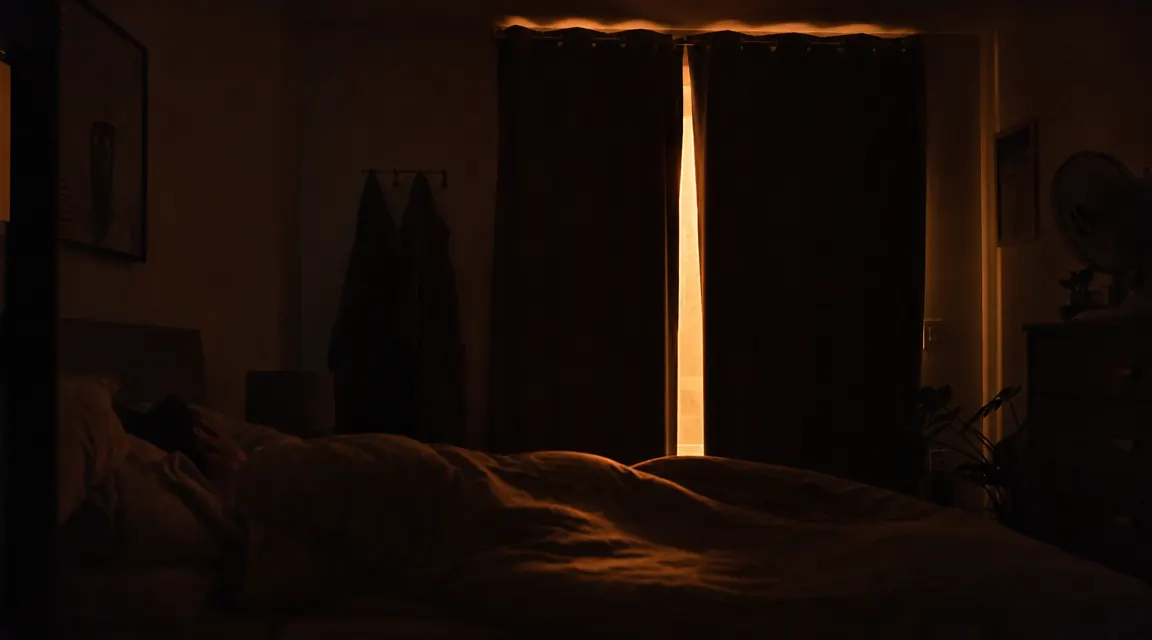
You have probably tried everything your friends suggested. Blackout curtains. Tape over the smoke detector LED. A pillow over your face at 5am when the sun starts leaking in. None of it works reliably, and the pillow thing is genuinely dangerous. The actual problem is simpler than any of that: your bedroom is producing light you have stopped noticing, and your brain has not. Every photon that hits your closed eyelids tells the pineal gland to slow melatonin production. Shallow sleep follows. You wake at 3am for no obvious reason. You feel like you slept badly even when you slept long enough. A properly fitted contoured sleep mask is the cheapest, fastest fix for most people, and this guide is the step-by-step walkthrough for getting it right.
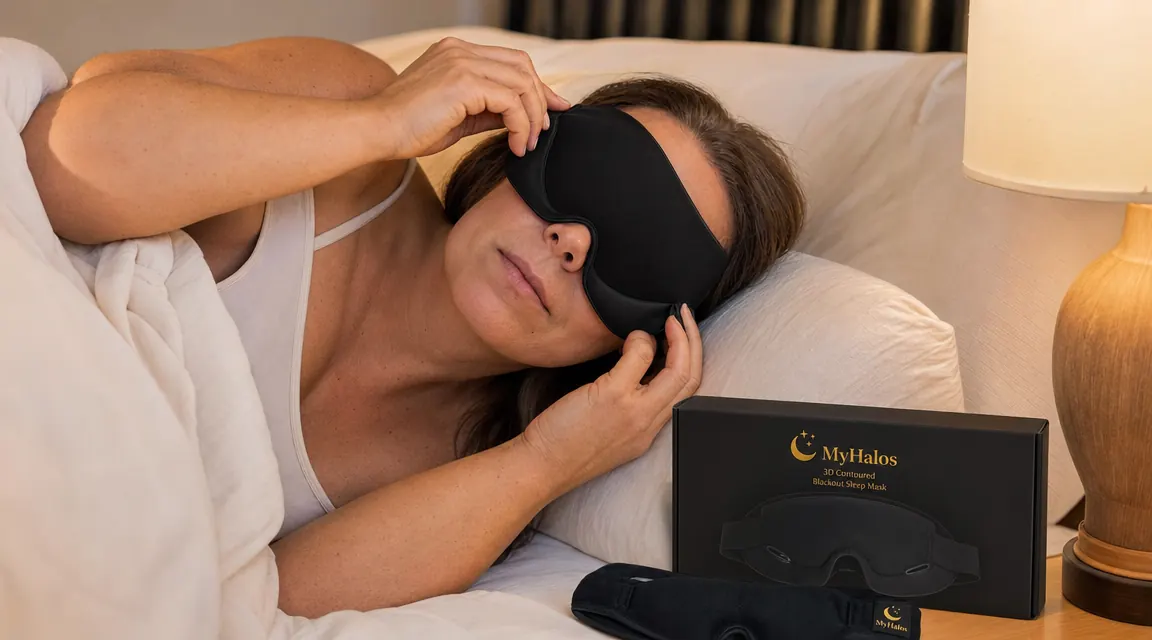
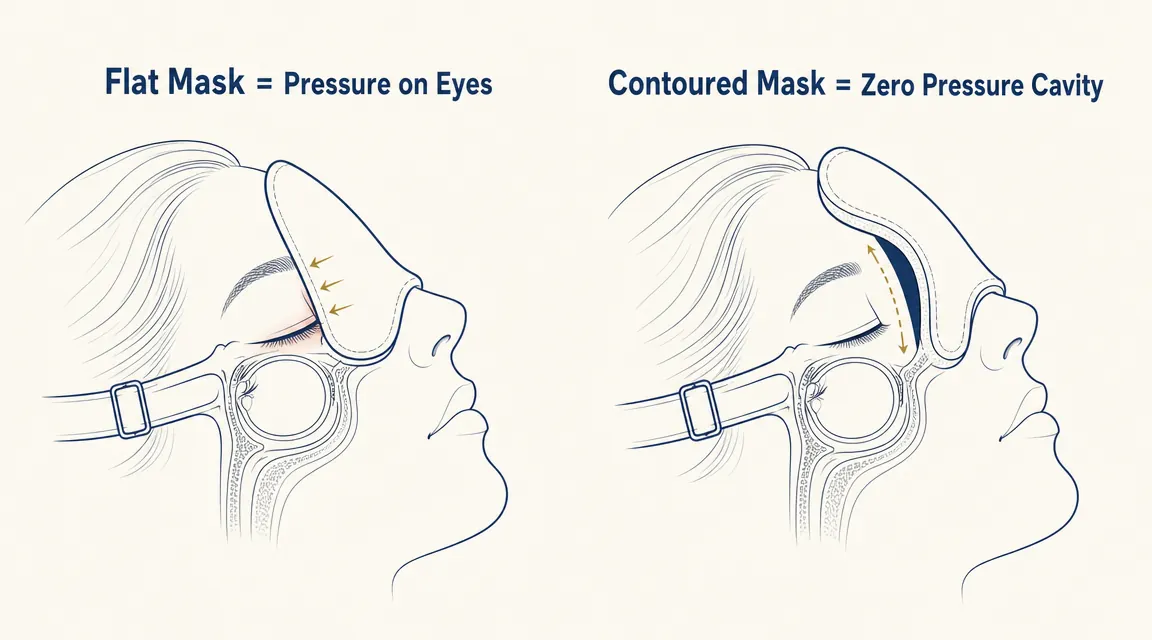
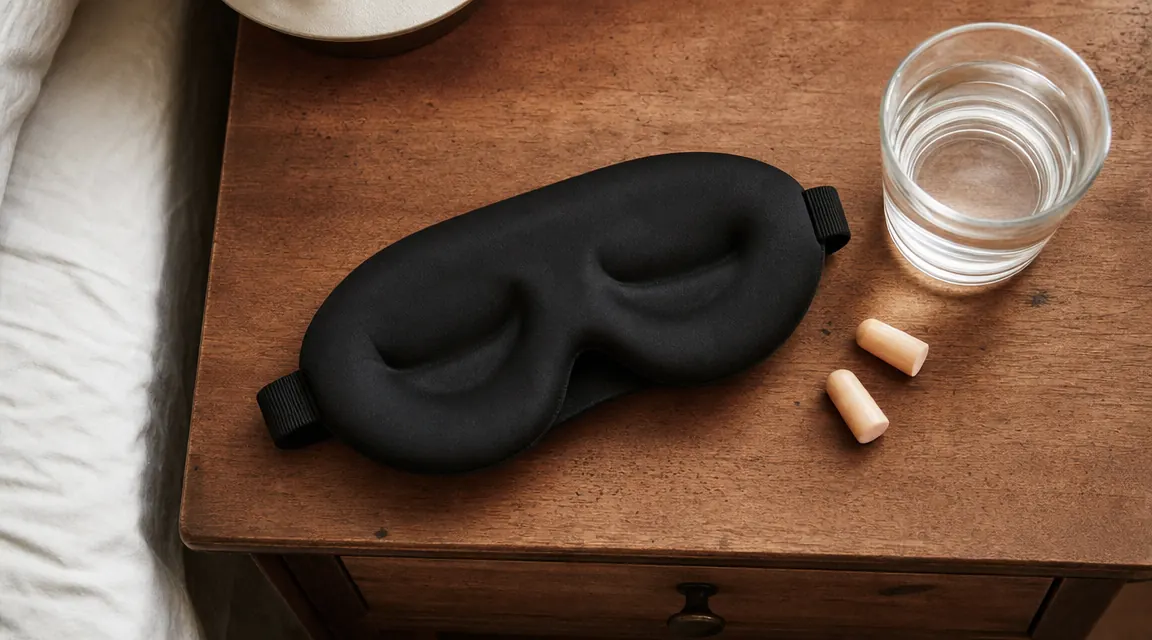
A word upfront: not all sleep masks do this job. Flat fabric masks press on your eyelids, which causes its own discomfort and wakes some people. The category you want is a 3D contoured mask, sometimes called a blackout eye mask or zero-pressure eye mask. It has raised molded cups that sit over the eyes like tiny inverted bowls, creating a cavity of complete darkness without touching your lids. The MyHalos 3D Blackout Sleep Mask is the one I have been recommending for the past year because it has the deepest cups I have tested, works for both side and back sleepers, and costs less than a single cup of airport coffee.
Stop letting your bedroom light ruin your sleep tonight
The MyHalos 3D Blackout Sleep Mask creates a complete-darkness cavity over your eyes with zero pressure on your lids. Rated 4.7 stars by over 20,000 sleepers. Fits side sleepers. Under $10.
Amazon Check Today's Price on Amazon →Step 1: Find Every Light Source in Your Bedroom
Before you put on a mask, do a brief audit. Lie down in your bed at your usual sleep time and let your eyes adjust for two full minutes. What do you see? Common offenders I find in almost every bedroom: the charging brick for a laptop or phone (often a bright amber LED), the standby light on a TV, the gap under the door when the hallway light is on, the gap at the edge of curtains where streetlight slips through, and the clock display on a cable box. Most people find three to six light sources they had stopped registering consciously.
Write them down or photograph them on your phone. Some of these you can address directly: a small piece of black electrical tape over a charging LED costs nothing and takes ten seconds. A rolled towel at the door base handles the hallway gap. For anything coming through windows, curtains, or from a partner who reads in bed, the mask is the right tool. You are not going to win a war against ambient urban light with fabric alone.
This audit also tells you how aggressive your masking needs to be. If your room is already 90 percent dark and one streetlight hits your left eye at 4am, a standard contoured mask handles it. If your room faces a lit parking lot and light blazes in all night, you want to combine the mask with at least one layer of curtain improvement.
Step 2: Choose the Right Contoured Mask for Your Sleep Position
Flat masks work reasonably well for strict back sleepers. For everyone else, the cushion gets compressed against a pillow and the seal breaks, letting light in at the cheekbone or nose bridge. Contoured 3D masks solve this because the cups themselves maintain the dark cavity even when the outer edge of the mask is slightly compressed. The key spec to look for is cup depth. Shallow cups (under about 12mm) still graze the eyelashes and cause discomfort during REM. The MyHalos cups are deep enough that even people with longer lashes report no contact.
Side sleepers need an adjustable strap that holds without a pressure point at the temple when the head is pressed against a pillow. The MyHalos uses a velcro-adjustable strap with memory foam padding across the nose bridge, which distributes the weight evenly instead of creating a single tight point. If you are a combination sleeper who moves between back and side, this is exactly the profile you want: low-profile enough not to snag on your pillow when you roll, sealed enough to stay effective.
Step 3: Fit the Mask Before You Turn Off the Light
This sounds obvious and almost nobody does it. The most common mask fit error is putting it on in the dark and hoping for the best. Fit it with the light on, adjust the strap until the cups sit symmetrically over your eyes with the nose bridge resting naturally, then do the light-check: place your palm over the mask and look upward. If no light bleeds in around your palm, the cups are seated correctly. If you see a crescent of light at the cheekbone or nose, loosen the strap slightly and reseat.
The strap should feel snug without being tight. You should not feel it pulling at the back of your head. A common error with first-time mask users is over-tightening because they are afraid of light leaking, but overtight straps cause a low-grade pressure headache that wakes you around 2am. Snug, not clamped. If you are waking with a faint forehead ache, loosen the strap a half inch.
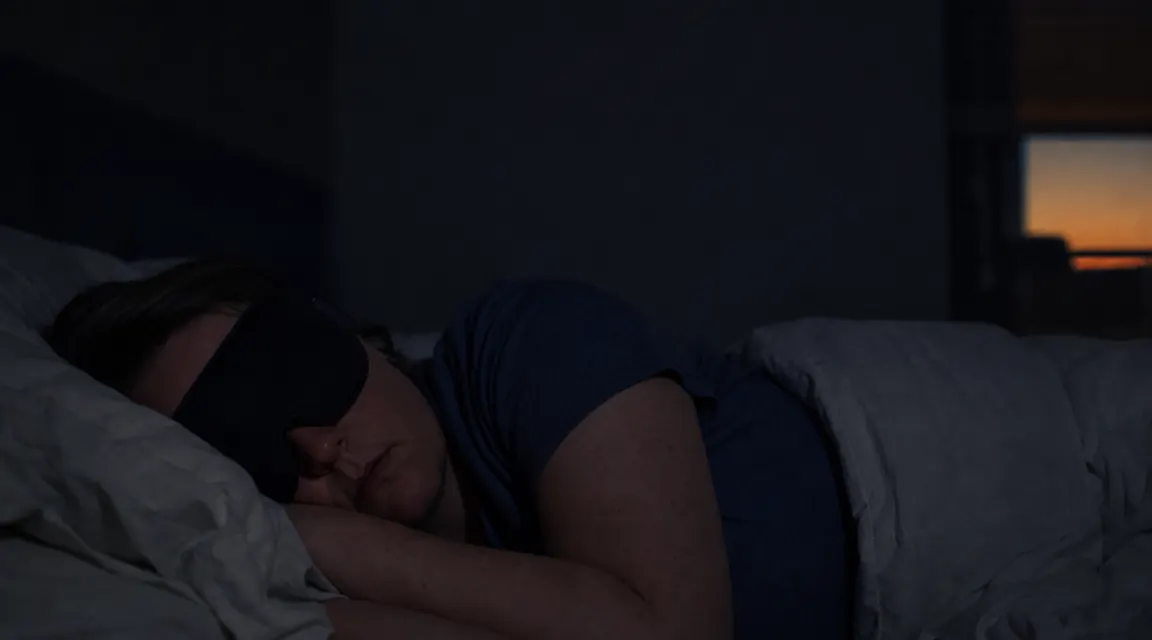
Once fitted correctly with the light on, turn off the light and lie in your actual sleep position. Open your eyes inside the mask. Total darkness means the seal is good. Any visible point of light means the mask has shifted. Adjust in position, not standing up, because your face and pillow geometry change when you are lying down.
Step 4: Pair the Mask With a Wind-Down Signal
Sleep masks work on two levels: the physical one (blocking photons from your retina) and a behavioral one (they become a learned cue that signals sleep. Every time you put on the mask, your brain starts the shutdown sequence faster. This only happens if you use the mask consistently, at the same time, as part of a deliberate wind-down. Put on the mask after you have done everything else, as the final step. Phone down, lights off, mask on. Within two or three weeks, reaching for the mask starts to feel genuinely sleepy-making. I noticed this around day 18 and it has held for over a year.
If you are also dealing with noise disturbance, this is a good time to address that too. White noise or earplugs used alongside the mask amplifies the signal-to-sleep effect. Eliminating both light and sound inputs simultaneously removes the two biggest environmental reasons your brain stays in a lighter sleep stage.
Step 5: Give It a Real Trial Period of 14 Nights
The most common complaint I hear from mask skeptics is that they tried one for two nights, found it slightly odd, and gave up. Two nights is not a trial. The first few nights with any new sleep accessory produce disrupted sleep because your body registers the new sensation. By night four or five the novelty disappears. By night ten, most people cannot fall asleep as easily without it.
Track one simple measure during your 14-night trial: the first time you look at the clock after falling asleep. For most people who have a genuine light-disruption problem, this number moves noticeably. Instead of waking at 2:30 and again at 4:15, they wake once at 5:45 or not at all. The pattern usually becomes clear by the end of the first week.
By night four, the novelty disappears. By night ten, most people cannot fall asleep as easily without it. That is not placebo. That is stimulus-response conditioning working in your favor.
What Else Helps
A sleep mask handles the light problem effectively on its own. But if you have been sleeping badly for months, light is likely one of several compounding factors. Temperature is the other big one. Melatonin secretion is triggered by both darkness and a drop in core body temperature. If your bedroom runs warm, even perfect darkness will not give you the sleep depth you are chasing. A cooling pillow, a lower thermostat setting, or lighter bedding alongside the mask addresses both inputs at once. I have a full guide on sleep masks and a detailed look at why blackout conditions make such a measurable difference in sleep stages if you want the underlying science rather than just the protocol.
One thing worth noting: if you have tried proper light elimination and temperature management and still wake repeatedly in the night, that pattern can be a signal worth discussing with a doctor. Fragmented sleep that persists regardless of environment can indicate sleep apnea or other conditions that no amount of gear will address. The mask is a very good tool for a very specific problem. It does not fix everything.
Under $10 to find out if light has been your sleep problem all along
The MyHalos 3D Blackout Sleep Mask has 4.7 stars across more than 20,000 reviews. Zero-pressure memory foam cups. Works for side sleepers. The 14-night test is low risk.
Amazon Check Today's Price on Amazon →