
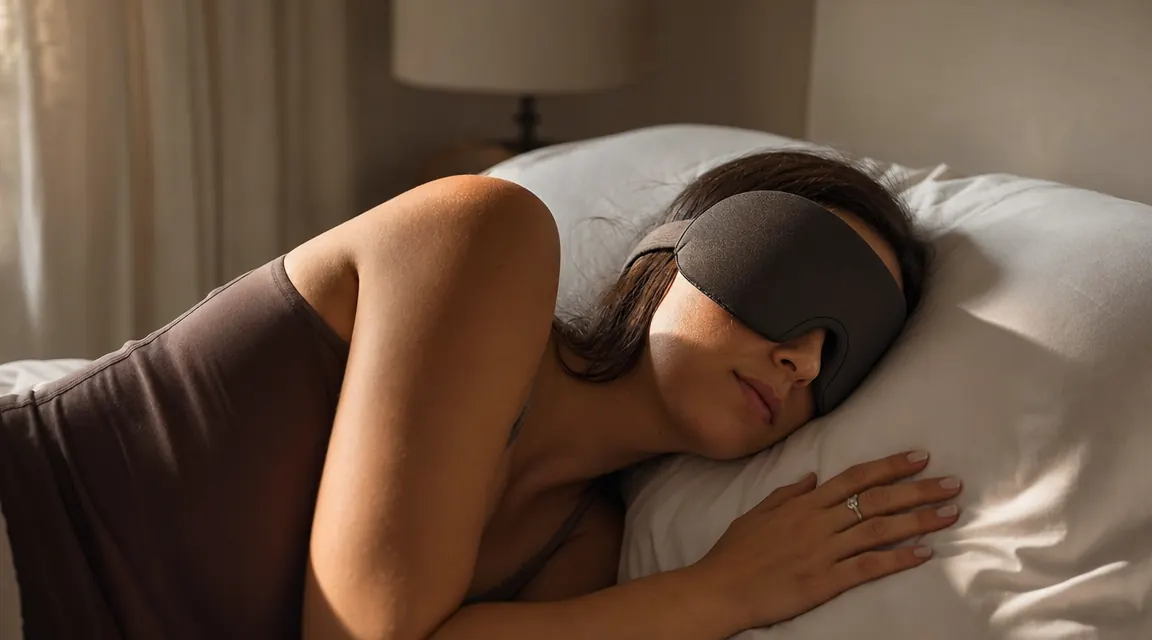
For about seven years, I had a drawer full of sleep masks that I never actually wore to sleep. A flat satin one that pressed on my eyelids and gave me low-grade headaches by 3am. A gel one that smelled faintly of rubber. A travel one from an airline that left elastic-band dents in my temples. I tried blackout curtains, which cost more than my first car payment, and they still left a gap along the bottom where the streetlight came through. I live on a corner lot in a neighborhood with a gas station across the street, which means there is always light: the pump canopy, the motion sensor floods, the ambient glow of a town that never fully goes dark. When I finally tried the MyHalos 3D contoured mask four months ago, I did not expect it to become the last thing I put on before I sleep every single night. But here we are.
I am a side sleeper, which is relevant because side sleeping is exactly where most sleep masks fail. You turn your head into the pillow and the frame of the mask shifts. The eye cup fills with light from below. The elastic rides up. The MyHalos is designed around a 3D molded structure that sits away from your eyelids entirely, so your eyes rest in a dark pocket of air rather than against fabric. It sounds like marketing language, but it changes the experience in a way that is hard to explain until you feel it.
The Quick Verdict
The best sub-$15 sleep tool I have tested. The 3D cups deliver genuine blackout without eyelid pressure, and the side-sleeper fit holds up remarkably well over four months of nightly use. The only real complaint is that the elastic eventually needs adjusting as it relaxes over time.
Amazon Check Today's Price →Still squinting at streetlights through a cheap flat mask? This is what four months of actually dark sleep feels like.
The MyHalos 3D contoured mask is rated 4.7 out of 5 by over 20,000 verified buyers. After four months of nightly use as a side sleeper, I understand why. Check the current price below.
Amazon Check Today's Price on Amazon →How I Have Used It: 4 Months of Real Nightly Wear
I started wearing the MyHalos on a Tuesday in January, purely out of desperation. My husband had started leaving a hallway light on for our daughter, who was going through a phase, and that light was slipping under our door and hitting me directly in the face from about 11pm onward. I ordered the MyHalos along with two other masks that evening, intending to test all three. The other two sat in their packaging for about a week before I returned them. I simply kept reaching for the MyHalos.
My test conditions: I wear the mask from lights-out until about 6am, approximately seven hours of contact time per night. I sleep on my left side primarily, rotating to my right and occasionally to my back. Room temperature holds around 68 degrees Fahrenheit. I have a low bridge nose, which is relevant because some masks sit oddly on flatter nasal profiles and leave a light gap at the bottom of the nose seal. Over the course of four months, I have washed the mask twice using the hand-wash method recommended on the tag.
Across 122 nights, I have taken the mask off in my sleep exactly four times. I remember each occasion because I woke up disoriented in the light. That is a retention rate I did not achieve with any previous mask. For comparison, the flat satin mask I used before this one came off at least two to three times per week.
The 3D Cup Design: What It Actually Does
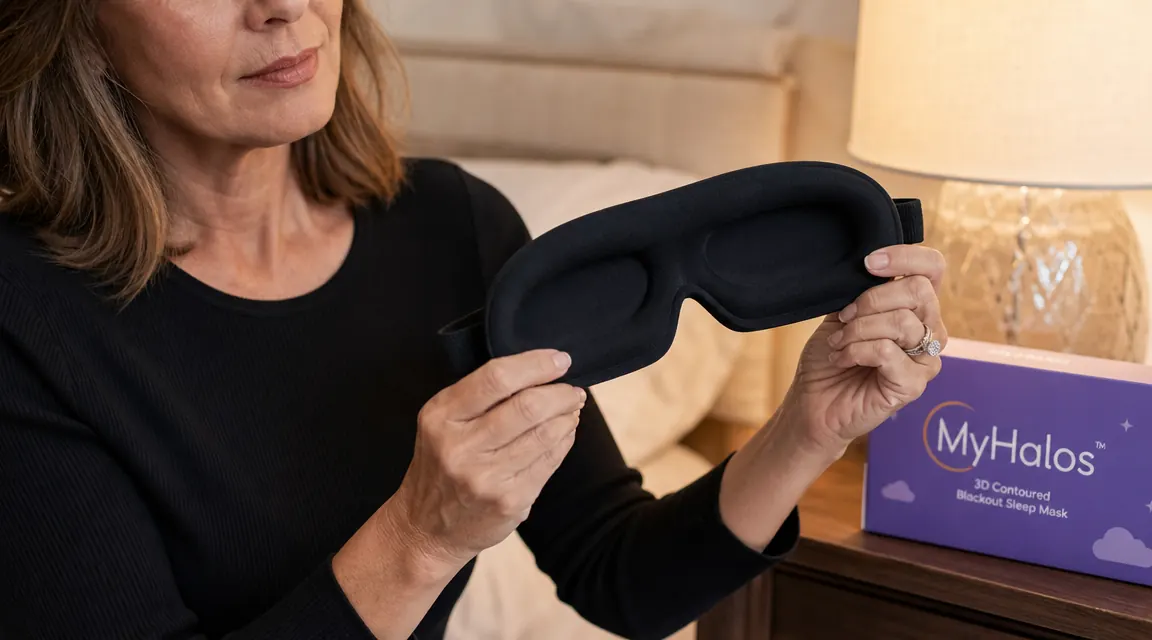
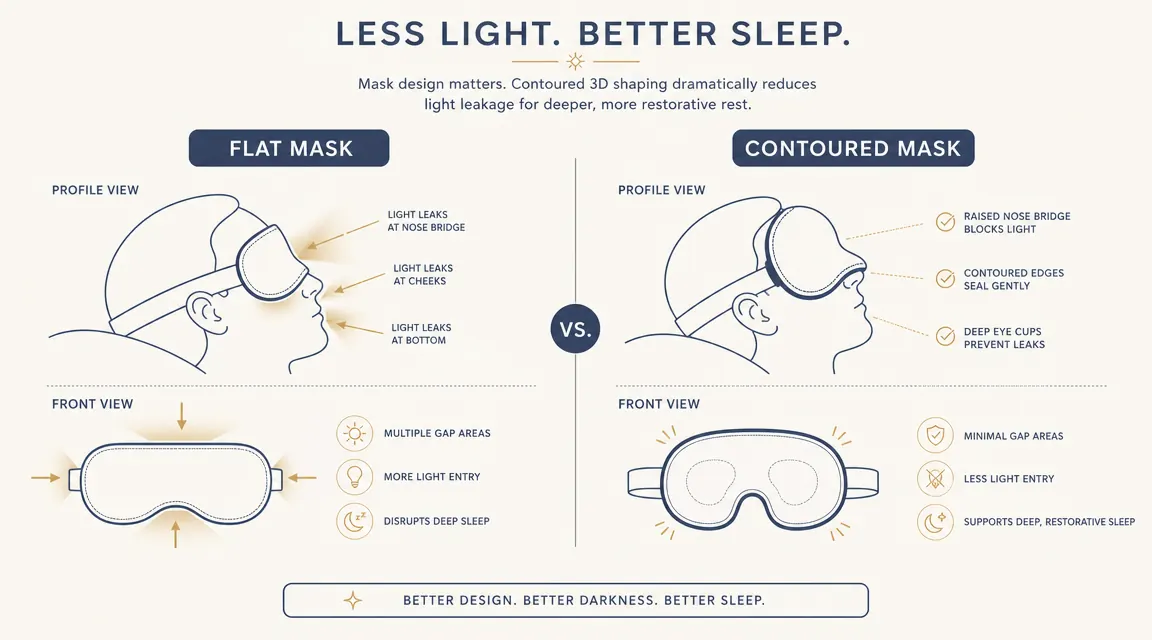
The molded cups are the entire reason this mask exists. Most sleep masks press directly against the eye, which creates two problems: first, it presses on your eyelids, which causes discomfort over hours and can interrupt REM sleep when your eyes are moving underneath; second, the mask makes direct contact with your face, which means any gap in the seal lets light in. The MyHalos cups are shaped so that your eye sits inside a pocket, not touching the fabric. The seal is made around the orbital bone, not the eye itself.
In practice, this means I can open my eyes inside the mask, blink freely, and there is no sensation of pressure on my eyeballs. The darkness is total: not the greyish dark of a flat mask pressed against your eyelids, but actual black. My daughter's sleep light, the gas station glow, the ambient light of a streetlamp three houses down -- none of it registers. When I take the mask off in the morning, the difference between masked dark and room light is jarring in a way it never was with flat masks.
The nose bridge has a flexible wire insert that lets you mold the fit to your face profile. This is where flat-nose-bridge users have historically had trouble with sleep masks: there is often a gap at the nose that lets in a vertical strip of light. I shaped the wire inward slightly, pressed it against my nose bridge, and the light leak closed. It takes about ten seconds to adjust. That wire has held its shape through four months of nightly use and two hand-washings without any deformation.
Side-Sleeper Fit: The Four-Month Report
This is the section most sleep mask reviews skip, because most reviewers test for a week and move on. Four months of side sleeping in the same mask reveals things a short test cannot. Here is what I found.
Months one and two: near-perfect. The elastic held its tension, the cups stayed seated regardless of which side I was on, and the nose bridge seal held. I woke up with the mask in place the vast majority of mornings. When I turned and pushed my face into the pillow, the 3D frame displaced rather than collapsed, which kept the blackout intact. This behavior is exactly what the design is supposed to deliver, and it delivered.
Months three and four: the elastic began to relax, which is normal for any band that sees seven hours of wear per night for 60-plus days. The mask stays on, but the fit is looser than it was. Light does not leak in, but I can feel that the seal relies more on me having a good nose-wire adjustment than on the elastic tension doing the work. I tightened the adjuster by one notch at the three-month mark and the fit improved noticeably. If you wear the mask every single night, plan to replace it around the six-month mark, or buy two and rotate them.
When I take the mask off in the morning, the difference between masked dark and room light is jarring in a way it never was with flat masks. That tells me something real happened to my sleep while I was wearing it.
Materials and Comfort Over Time
The outer shell is a soft fabric that has held up well to washing. No pilling, no warping of the cup structure, no cracking at the nose bridge wire seam. The interior is a slightly plush lining that sits against the face around the orbital bone. After four months, I have some very minor compression at the contact points on my temples -- the skin there has adjusted to the elastic, which is normal and not uncomfortable.
The mask runs slightly warm in summer. I started using it in January and had no issues through March, but in April when our nights started reaching the low 70s, I noticed a mild warmth around the eye area that I did not notice in winter. This is not unusual for any sleep mask with coverage, and it has not caused me to stop wearing it, but it is worth noting if you sleep very hot already.
The strap is attached at the sides with what appears to be a simple sewn junction. I have watched that junction carefully, because that is typically where masks fail after a few months. Mine has not shown any separation or fraying in four months. The adjuster mechanism shows no signs of loosening either -- only the elastic band itself has relaxed, which is expected and manageable.
What I Noticed About My Sleep
I want to be careful here, because attributing sleep changes to a single product is not science. But I track my sleep with a wearable, and I can say what happened objectively. In the six weeks before I started using the MyHalos, I averaged one to two wake events per night between 11pm and 6am, which is when the hallway light was active. In the first month of wearing the mask, my tracked wake events dropped to an average of 0.4 per night. I do not know whether to credit the mask, a change in our daughter's sleep patterns, or some combination. But the timing correlates cleanly.
What I can say more confidently is subjective: I wake up feeling less fragmented. With the flat masks I used before, there was always a low-level awareness of light that I suspect was keeping me in lighter sleep stages closer to morning. With the MyHalos, I fall asleep faster and I stay down longer. Whether that is placebo or photoreceptor biology, I genuinely do not care. The result is real.
Alternatives I Considered
The most frequent comparison for the MyHalos is the Manta Sleep Mask, which uses a similar 3D cup concept but with adjustable cup pods that move independently on the frame. The Manta costs significantly more. I tested the Manta briefly at a friend's house and found the fit to be excellent, particularly for adjusting to wider or narrower face widths. If you have a face that is hard to fit -- very wide-set eyes, for instance -- the Manta's adjustable cups may serve you better. For average face widths, the MyHalos fits cleanly and delivers the same core benefit at a fraction of the cost.
I also tried the Alaska Bear flat mask, which many sleep editors recommend as the budget standard. It is comfortable for short naps and travel, but it pressed on my eyes overnight and came off consistently during side sleeping. Good mask for the right use case. Not the right use case for me. The difference in design philosophy between a flat mask and a contoured one is not subtle once you have experienced both.
What I Liked
- True blackout from a 3D cup design that keeps fabric off your eyelids entirely
- Holds position well during side sleeping -- 122 nights of evidence on this
- Adjustable nose-bridge wire seals the light gap that sinks most other masks
- No eyelid pressure, so REM eye movement is unrestricted throughout the night
- Washes well without cup distortion or deformation at the wire seam
- Priced under $15, which makes the planned replacement cycle easy to manage
Where It Falls Short
- Elastic relaxes noticeably after about 60-90 nights of daily wear; plan to replace around the 6-month mark
- Runs slightly warm in summer months, worth knowing if you already sleep hot
- Cup depth means stomach sleepers pressing their face fully into the pillow will compress the cups
- The strap adjuster can be fiddly to re-thread if the mask comes off mid-sleep
Who This Is For
You sleep on your side, you have light coming into your room that you cannot fully control, and you have wasted money on flat masks that either press on your eyes, fall off in the night, or leave gaps at the nose bridge. You are not looking for a luxury sleep accessory with a premium price tag. You want something that actually works for seven hours of real side sleeping at a price that makes sense. The MyHalos is built for exactly this person. It is also a strong pick for anyone whose partner keeps a phone screen or lamp on late, or anyone sleeping in a space with an outdoor light source they cannot black out with curtains alone.
Who Should Skip It
Strict stomach sleepers who press their face fully into the pillow will find the 3D cups work against them: the depth of the cup compresses under direct downward pressure, which defeats the blackout. You might also want to skip it if you run very hot overnight and are sensitive to anything covering your face -- there are thinner, less structured masks that stay cooler, though they sacrifice blackout quality. Finally, if you change masks frequently for hygiene reasons and want something built to last two or more years of daily use, this is not that product. At this price point, it is best treated as a consumable that earns its keep for six months and then gets replaced.
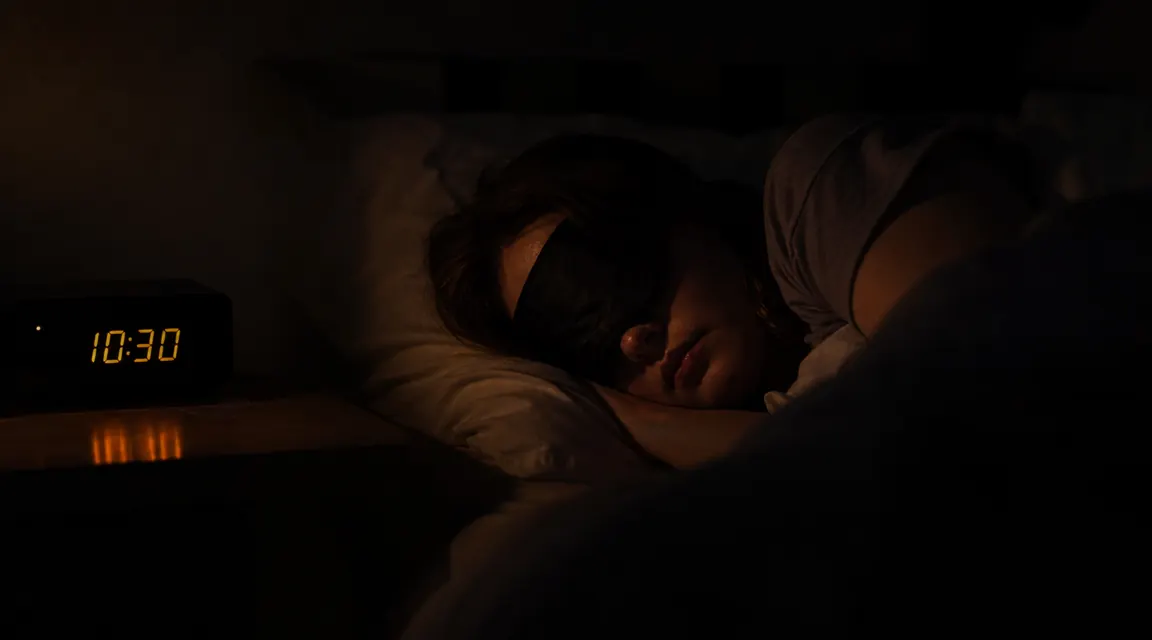
Four months in, I still reach for it every night. That is the review.
The MyHalos 3D contoured sleep mask is under $15 and rated 4.7 stars by more than 20,000 buyers. If light leaks are costing you sleep and nothing you have tried has held position through a full night of side sleeping, this is the most practical fix at this price. Check the current price on Amazon.
Amazon Check Today's Price on Amazon →