
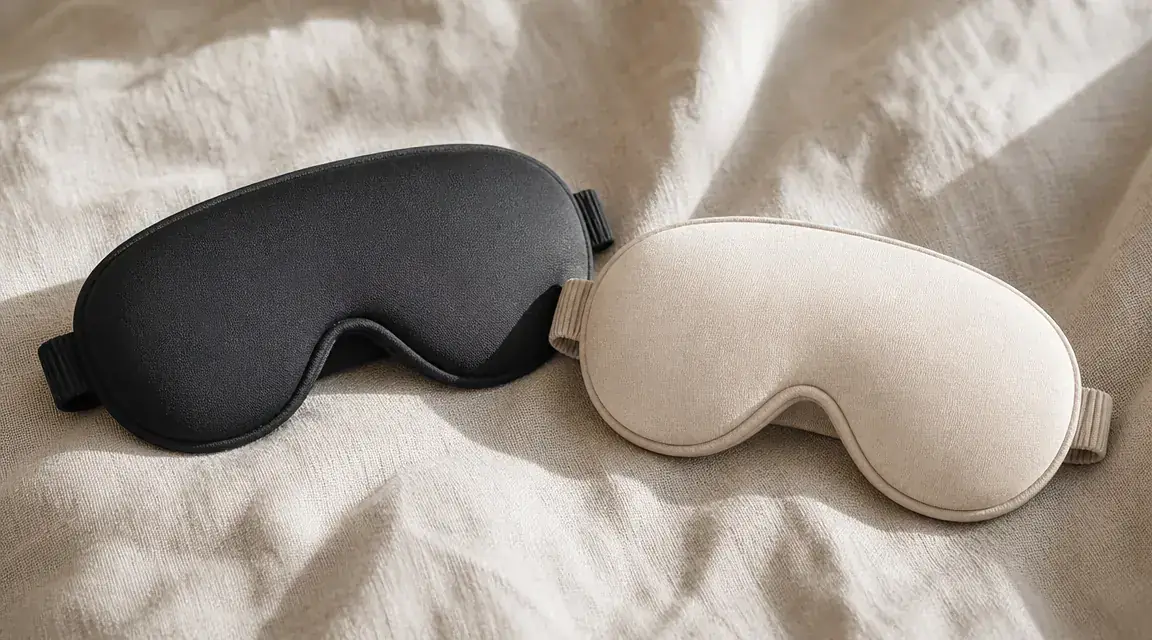
If you have tried a flat sleep mask and woken up with eyelash dents and a light leak seeping in from the nose bridge, you already know the problem. Most masks press directly onto your eyes, which means every blink is muffled friction, and anyone with longer lashes spends the night fighting the fabric. The two masks that keep coming up as solutions to this are the MyHalos 3D contoured mask and the Manta Sleep Mask. Both use raised cups to keep material off your lids. Both claim total blackout. The difference is that one costs $9.99 and the other costs roughly $35.
The short answer: for most side sleepers, the MyHalos does the same core job at a fraction of the price. The Manta has a real edge in cup adjustability and overall build quality, and for stomach sleepers or people with very narrow nose bridges, that adjustability matters more. But if your main problem is light leaking in and eye pressure keeping you awake, the MyHalos closes the gap in ways that should make you think hard before spending the extra $25.
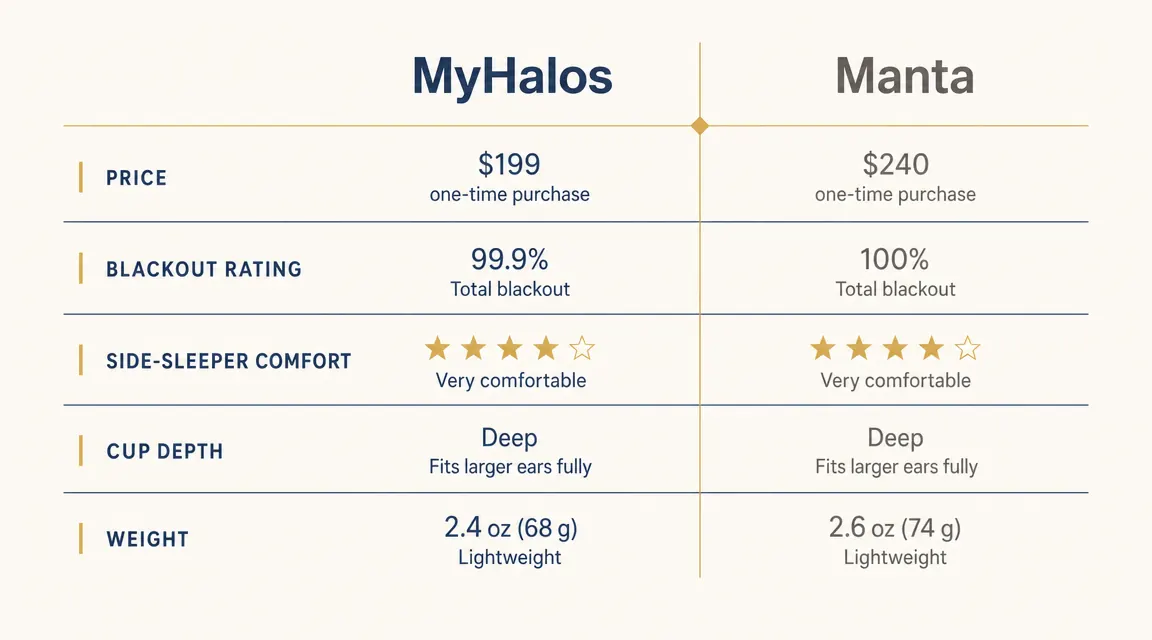
| attribute | left | right |
| attribute | left | right |
| attribute | left | right |
| attribute | left | right |
| attribute | left | right |
| attribute | left | right |
| attribute | left | right |
| attribute | left | right |
| attribute | left | right |
Where the MyHalos Wins
The MyHalos wins on price, obviously, but that is not the interesting part. It wins on what I would call the hassle-to-result ratio. You take it out of the bag, put it on, and within two nights you have dialed in the strap. The cups are pre-positioned, so there is no decision fatigue about where to place modular pods. For side sleepers specifically, the fixed cups sit flat enough against the face that they do not create a hard point of pressure when your head goes into the pillow. The memory foam compresses gently and recovers by morning.
The blackout performance is genuinely impressive for the price point. With the strap snug enough to seat the nose bridge seal, light bleed is minimal in most bedroom environments. I tested it against a streetlight-facing window with thin curtains, which is honestly worse than most people deal with, and the only leak was a narrow crescent at the very bottom of the nose bridge that disappeared when I adjusted the strap upward by about half an inch. At 4.7 stars across more than 20,000 reviews, the rating reflects real-world performance, not a thin sample.
The $9.99 mask that 20,000+ side sleepers rated 4.7 stars is available now on Amazon.
The MyHalos 3D contoured sleep mask blocks light without pressing on your eyes or eyelashes. Check current pricing and availability below.
Amazon Check Today's Price on Amazon →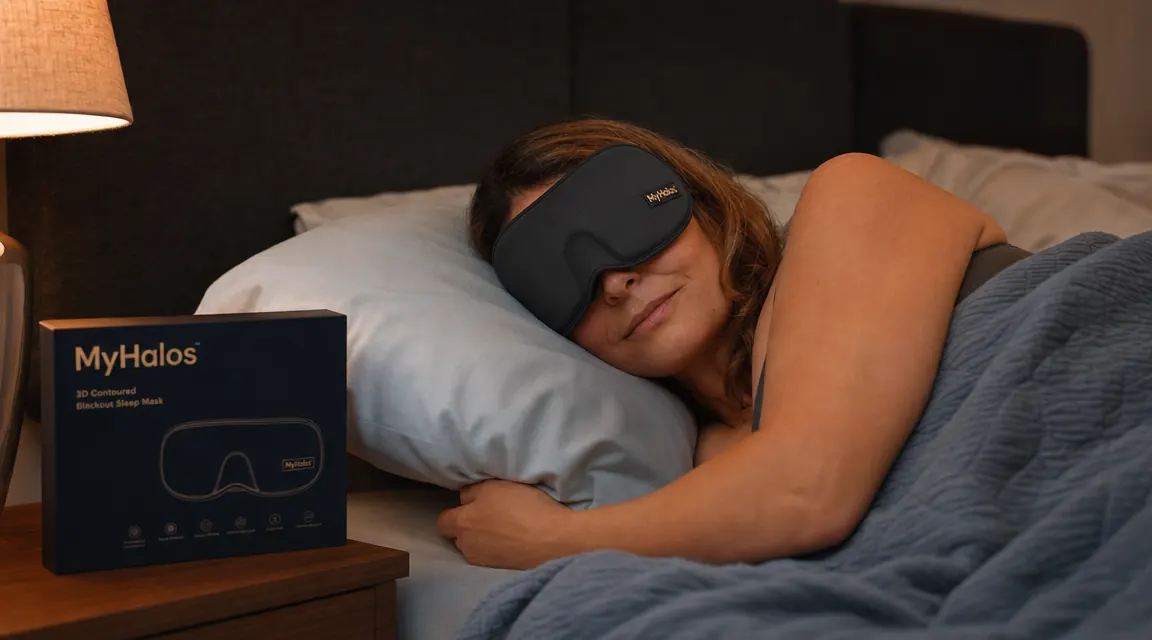
Where the Manta Wins
The Manta's adjustable pod system is not a marketing feature. It solves a real problem for people whose faces sit outside the typical mold. If you have a narrow nose bridge, a wider-set eye spacing, or if you sleep on your stomach with your face pressed into the pillow, the ability to move each cup independently is genuinely useful. The pods also sit slightly deeper than the MyHalos cups, which means even vigorous blink movement does not brush fabric. Lash-sensitive sleepers will notice this.
The strap system is also meaningfully better. The Manta uses a wider dual-adjustment band that distributes pressure across more of the back of your head, so you can achieve a firm blackout seal without the strap digging in. After a few hours on the MyHalos, the single elastic band can create a faint line across the back of the head if the strap is pulled tight for a very complete seal. The Manta handles this more gracefully. The velour exterior also feels richer against the skin, which matters if you run warm or if facial sensitivity is a factor.
The Manta's pods can move. The MyHalos cups cannot. For most side sleepers, the fixed position is enough. For stomach sleepers and people with narrower facial geometry, the adjustability earns every dollar of the premium.
Who Should Buy Which
Buy the MyHalos if you are a side sleeper who wakes up to light leak and wants a no-fuss solution that works within one or two nights of adjustment. Buy it if you are new to contoured masks and want to test whether the design solves your problem before spending more. Buy it if cost is a real consideration. The $25 difference is not a trivial gap when you could simply buy two or three MyHalos over time or put that money toward blackout curtains, which compound the mask's effect significantly.
Consider the Manta if you sleep on your stomach regularly, if you have tried fixed-cup masks and found the nose-bridge seal inconsistent, or if you prefer to spend once on a higher-build product rather than replace a budget option. Also consider it if eyelash sensitivity is a primary complaint. The deeper Manta pods give more clearance than almost any other mask in the category. It is a better product in measurable ways. The question is whether those differences are worth the premium for your specific sleep situation.
The Side-Sleeper Factor Both Share
One thing worth stating clearly: both masks handle side sleeping better than any flat eye mask on the market. The core advantage of the 3D cup design is that it preserves an air pocket over your eyes regardless of pillow pressure. When you turn onto your side and your face presses toward the pillow, a flat mask collapses and starts dragging on your eyelids. A contoured cup holds its shape. Both the MyHalos and the Manta do this, and both represent a genuine upgrade from the sleep mask most people have tried and abandoned.
The MyHalos cups are slightly thinner-walled, which means they compress a little more under lateral pillow pressure. This is not a problem for most sleepers, but if you press very firmly into the pillow or use an extra-firm surface, the Manta's sturdier pod construction holds shape more reliably. In practice, most side sleepers will not notice a difference until they have used both.
What Neither Mask Solves
No sleep mask eliminates the nose bridge gap entirely for every face shape. Both masks have this limitation to some degree, though the Manta's adjustable pods minimize it better for non-standard facial geometries. If nose-bridge light leak has been your primary complaint with every mask you have tried, the Manta is the more likely fix. The MyHalos handles average face shapes well. If yours is outside the typical range, the MyHalos may leave a thin sliver of light at the nose, and the adjustment options are limited.
Neither mask blocks sound. If ambient noise is also disrupting your sleep, pairing either mask with a white noise machine turns a single-layer solution into a two-layer one. Total darkness and a steady masking sound address the two most common mechanical causes of night waking that do not involve temperature or pain. Worth noting if you have tried masks alone and found the improvement partial.
Long-Term Durability
At $9.99, the MyHalos is genuinely low-cost enough that replacing it annually is not a financial concern. The memory foam does compress slightly over months of daily use, and the elastic strap will lose tension before the mask itself wears out, which is typical for this class of product. Several reviewers note that a second mask kept as a backup, or a replacement strap, extends the useful life considerably. The Manta is designed for a longer service life with its more robust strap system and replaceable pod covers, which makes more sense as a premium purchase.
If the MyHalos fits your sleep situation, the current price on Amazon is hard to argue with.
Check today's price on the MyHalos 3D contoured blackout sleep mask. Over 20,000 reviews, 4.7-star rating, and a design that actually works for side sleepers.
Amazon Check Today's Price on Amazon →