

Here is the thing nobody says in a weighted blanket review: these products do not work the same way for everyone, and the ones that sell 49,000 units on Amazon tend to collect reviews from people who already were a good fit. If you are a cold, anxious, light sleeper who wakes at 3am for no reason, the YnM weighted blanket will probably help you. If you run warm, kick your covers off by midnight, or sleep on your stomach, it may end up folded in a closet by February.
I am Claire, and I fit squarely in the first camp. Chronically cold, anxious since my late 20s, and a light sleeper since my first kid arrived and rewired my nervous system permanently. I have been sleeping under the YnM 15-pound blanket for close to three months now -- not to confirm it works, but to find where it does not. This is what nobody told me before I bought it.
The Quick Verdict
A genuinely effective tool for anxiety-driven light sleepers -- with real care, washing, and overheating caveats that matter more than the marketing suggests.
Amazon Check Today's Price →Still awake at 3am wondering if this would actually help you?
The YnM 15-lb blanket is one of the most honest value propositions in the sleep category. If you are a cold, anxious, light sleeper, the odds are in your favor. Check today's price before the size you want sells out.
Amazon Check Today's Price on Amazon →What the Product Page Does Not Mention
The YnM listing shows a relaxed woman, a clean bedroom, and a series of cheerful bullet points about deep touch pressure stimulation. All of that is accurate. What it skips is the adjustment period, which is real. The first three nights under 15 pounds of blanket felt strange, not soothing. My body kept registering the weight as something to respond to rather than something to relax into. Night four was different. Night seven was when I stopped noticing the weight at all and just started noticing that I was sleeping.
This matters because a lot of people try a weighted blanket for two nights, feel nothing, and return it. The mechanism -- deep touch pressure, which mimics the calming effect of being held -- requires your nervous system to stop treating the weight as a stimulus. That takes most people five to seven days. If you give up at day two, you will leave a one-star review saying it did not help, and you will be right, but you will also have quit before the product had any real chance.
The Glass Beads: Better Than Pellets, Not Perfect
The YnM uses glass microbeads rather than plastic poly-pellets. This is a meaningful distinction. Glass beads are denser, so you get more weight in a thinner blanket. The fabric lies flatter against your body, which improves the pressure distribution and reduces the quilted lumpiness you get with pellet-filled blankets. I have slept under both. The glass-bead version is noticeably less fidgety.
The downside is that glass beads are also slightly noisier when you shift positions at night. Not loud -- a quiet rustle, not a rattle -- but if you are an extremely sensitive sleeper, you will hear it. My husband noticed it for the first few nights before tuning it out. For reference, he also hears the refrigerator compressor cycling from two rooms away, so his baseline is not representative. Most people will not find it an issue. I am flagging it because nobody else does.
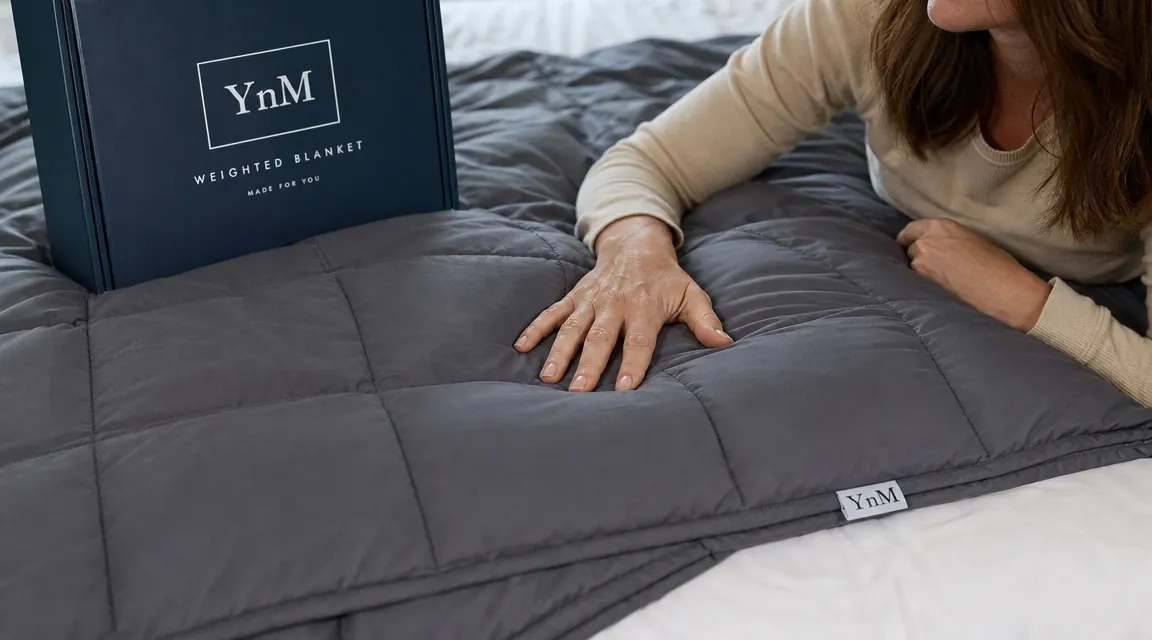
The bead distribution held up well across three months of nightly use and multiple washes. No migration, no lumping in the corners. The 7-layer construction -- which YnM uses to distribute the beads evenly across the grid -- actually does what it claims. I spread the blanket flat on my bed after each wash and checked the weight distribution by pressing across different sections. It is consistently even.
The Overheating Problem Is Real, and It Is Seasonal
Here is the piece of information I wish I had in October before ordering: weighted blankets trap heat. The YnM is made from a cotton-polyester blend that breathes reasonably well compared to some alternatives, and the glass beads themselves do not retain warmth the way foam does. But 15 pounds of anything sitting on top of your body is an insulating layer, and if your bedroom runs warm or you sleep hot, you will wake up uncomfortable.
I noticed this personally in mid-April when my bedroom started reaching 68 degrees at night. At 62 degrees, the blanket was perfect. At 68, I was kicking a leg out by 2am. At 72, I gave up and put it away for the summer. That is not a failure of the product -- it is physics -- but the Amazon listing uses the phrase 'all seasons' in the title, which sets an expectation that does not quite hold for warm-weather sleepers.
At 62 degrees, the blanket was perfect. At 68, I was kicking a leg out by 2am. 'All seasons' is aspirational marketing for anyone who runs warm.
If you want to use a weighted blanket year-round and you sleep hot, look at the YnM cooling version with bamboo fabric instead of the standard cotton blend. It costs slightly more, but the breathability difference is significant enough to matter. The standard model I tested is a fall-through-spring product for most people who do not keep their bedrooms at 65 degrees year-round.
Washing It Is Not Trivial
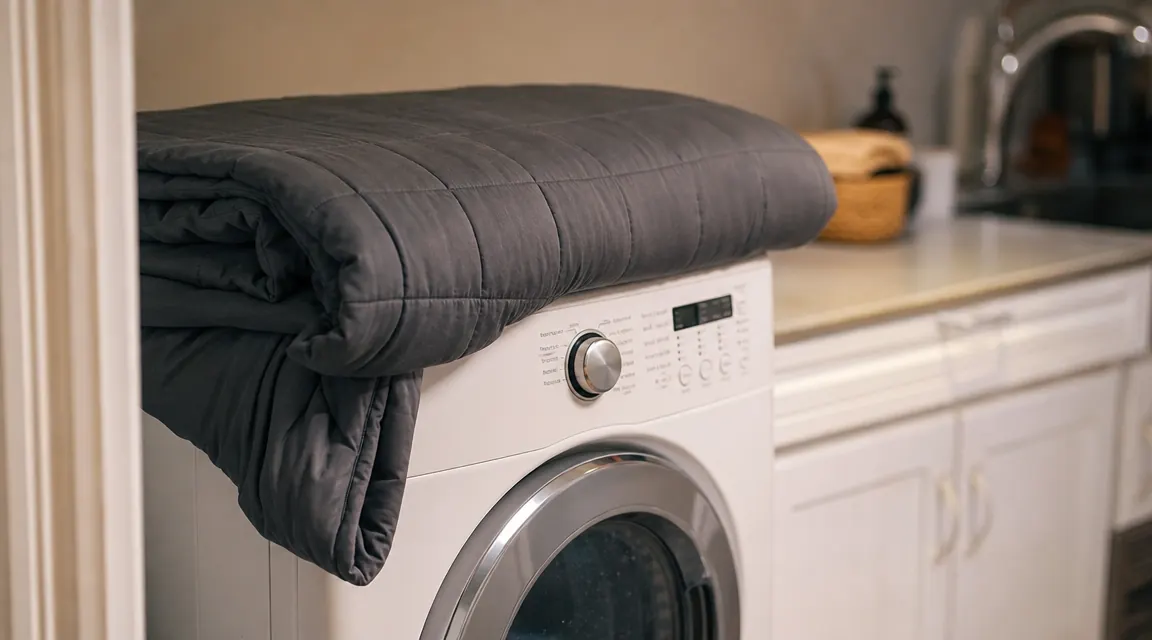
I want to spend a moment on laundry logistics because this is genuinely the most underreported friction point with weighted blankets. A 15-pound blanket is 15 pounds wet. Many standard home washing machines have a weight limit of 8 to 10 pounds for safe spin cycles. Putting a saturated 15-pound blanket into a machine rated for 10 will, over time, wear down the drum bearings. I know this because a repair technician told me so after I asked.
YnM's care instructions say to use a commercial washer for anything over 10 pounds, which means a laundromat trip for most people with standard home machines. I do this every three weeks. It takes about two hours total. The blanket needs a full extra rinse cycle to clear the detergent from that many layers, and it needs to tumble dry completely -- any moisture left in the inner layers creates a mildew risk that is unpleasant to discover. This is not a product you can toss in the wash on a Tuesday night and forget about.
Who This Actually Works Best For
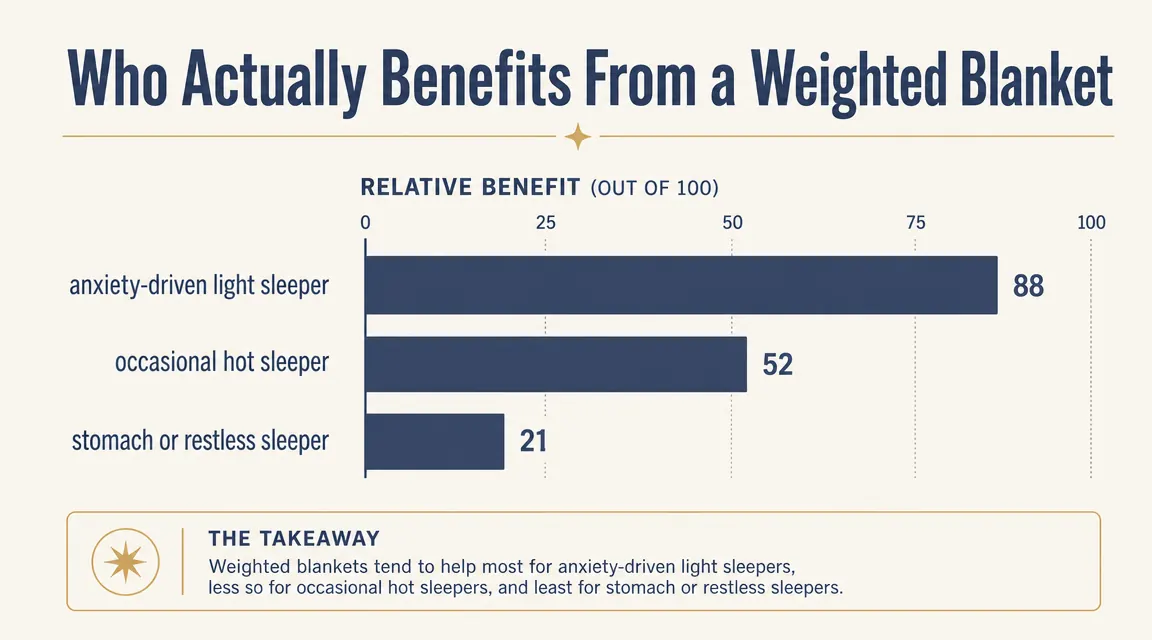
I put together a simple framework based on my experience and the patterns I see in the reviews. Weighted blankets -- this one included -- work best for anxiety-driven insomnia. If your sleep problem is that your brain will not quiet down at bedtime, or that you wake at 3am and cannot get back to sleep because your thoughts start cycling, the pressure helps. It is not placebo. The deep touch pressure response is documented in occupational therapy literature going back to the 1980s. It calms the sympathetic nervous system in a measurable way.
Where it works less well: restless sleepers who move a lot, stomach sleepers (the weight on your back when face-down is uncomfortable and puts strain on your lower spine), and anyone whose sleep problem is environmental rather than neurological. If you are waking up because of noise, light, or a partner who snores, a weighted blanket will not fix that. You need a sound machine or a sleep mask for those problems, and no amount of pressure will compensate.
The Weight Sizing Question (And Why Most People Get It Wrong)
The conventional advice is to choose a blanket that is 10 percent of your body weight. I weigh 138 pounds, which makes the 15-pound blanket technically slightly heavy for me by that formula. I chose it anyway because I knew I would mostly use it folded across my legs and lower body while reading before sleep, and would occasionally sleep fully under it. That worked well. If I had been planning to sleep fully under it every night, I would have gone with the 12-pound version.
The 10-percent rule is a reasonable starting point but not a hard limit. The more important variable is where you use it. Full-body sleepers should stay closer to 10 percent or slightly under. People who fold it across their chest and legs while winding down in the evening can tolerate slightly more weight without discomfort. The YnM is available in 5-pound increments up to 25 pounds, so there is enough granularity to find the right fit. Just do not assume heavier means more effective -- past a certain point, you are just fighting the blanket.
What I Liked
- Glass microbeads distribute weight more evenly and lie flatter than plastic pellet alternatives
- Anxiety-driven insomnia responds well -- the deep pressure effect is real, not marketing
- Price point makes it accessible without feeling like a compromise on quality
- 7-layer construction holds up through repeated washing with no bead migration in three months
- Works exceptionally well as a legs-and-lower-body comfort layer for evening wind-down, not just sleep
Where It Falls Short
- Real adjustment period of five to seven nights -- quitters at day two will miss the benefit
- Traps heat noticeably above 67 to 68 degrees -- seasonal for most non-cold-climate households
- Requires a commercial washer for the 15-pound version; laundromat trips every few weeks
- Glass beads produce a faint rustle when shifting positions -- minor but worth knowing
- Does nothing for sleepers whose problems are environmental (noise, light, temperature) rather than anxiety-driven
The Surprising Use Case Nobody Talks About
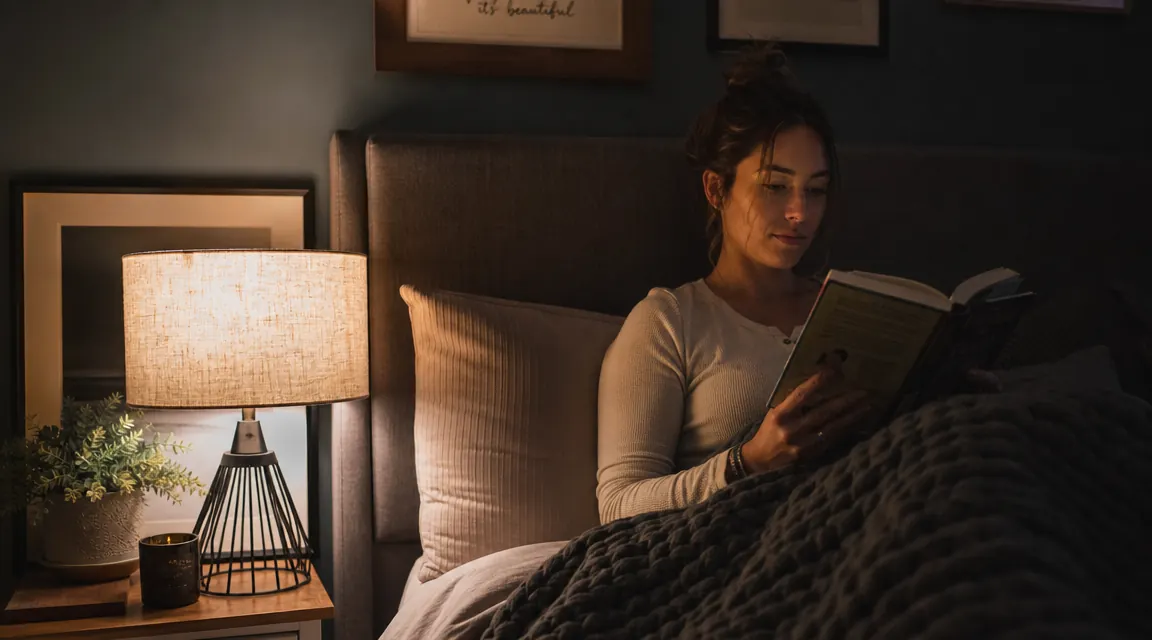
I did not expect to find this, but the weighted blanket became most useful to me not at 11pm when I am trying to fall asleep, but at 10pm when I am trying to stop being awake. I fold it across my lap while I read, and something about the weight across my thighs and lower body starts the nervous system wind-down earlier than my usual routine. I fall asleep faster because by the time I turn the light off, my cortisol has already been drifting down for an hour.
A few people in the Amazon reviews mention something similar -- using it on the couch while watching television in the evening. The effect is the same. You are effectively training your body to start its descent toward sleep before you are horizontal. For people with anxiety-driven sleep trouble, this is probably the highest-value use of the blanket, and it requires no behavioral changes beyond folding the thing across your lap during your normal evening routine.
Who This Is For
Cold, anxious, light sleepers who live somewhere with cool winters and keep their bedrooms on the cooler side year-round. People whose sleep trouble centers on racing thoughts, waking at 3am, or difficulty settling at bedtime. Anyone who already uses white noise, blackout curtains, or other environmental sleep tools and wants to add a tactile element to the stack. This blanket fits into a thoughtful sleep setup; it is not a standalone fix for chaotic sleep hygiene.
Who Should Skip It
Hot sleepers, stomach sleepers, and anyone in a warm climate without strong air conditioning. Restless sleepers who kick and turn throughout the night -- the weight will end up bunched at the foot of the bed by 2am. People whose sleep problems are primarily environmental (partner snoring, street noise, light pollution from windows). And anyone unwilling to make regular laundromat trips, since washing it at home in a standard machine is a slow way to ruin your appliance.
If anxiety is what keeps you up, this is the sleep tool most worth trying first.
The YnM weighted blanket is the rare sleep product that delivers on its core promise for the right person. The right person is a cold, anxious, light sleeper. If that is you, check today's price and pick the weight closest to 10 percent of your body weight.
Amazon Check Today's Price on Amazon →