
Somewhere around 2am, the melatonin has worn off, your brain is replaying every awkward thing you said in 2019, and you are once again staring at the ceiling doing math on how many hours of sleep you can still salvage if you fall asleep right now. You have tried the sleep hygiene checklist. You have the white noise app. You have done the magnesium. And yet here you are. A weighted blanket is one of those things that sounds almost too simple, which is probably why a lot of anxious sleepers dismiss it. I was skeptical too, until I slept under one for a few months and stopped having that particular 2am problem quite so often. Here is what is actually happening when it works.
Still staring at the ceiling at 2am? This is the blanket I use.
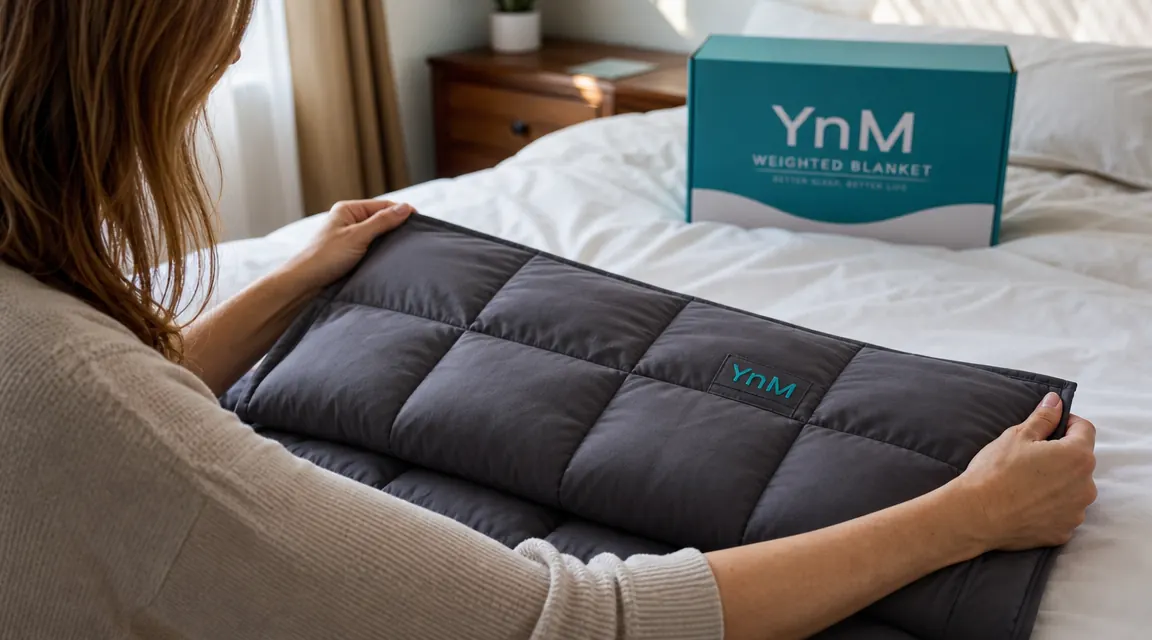
The YnM Weighted Blanket uses small glass beads to deliver even, calming pressure across your whole body. Over 49,000 people rated it, and it costs less than a month of melatonin gummies.
Amazon Check Today's Price on Amazon →It triggers your parasympathetic nervous system, which is the thing that actually turns off anxiety
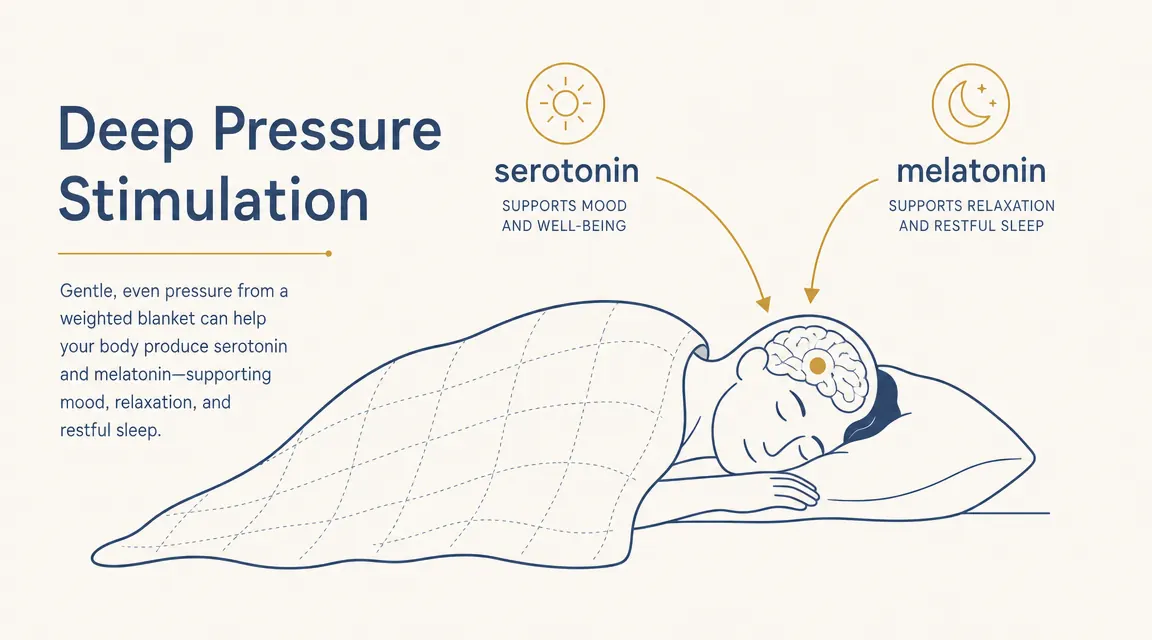
The pressure from a weighted blanket activates what researchers call deep pressure stimulation. This signals your autonomic nervous system to shift from fight-or-flight mode into rest-and-digest mode. In practical terms, your heart rate slows, your breathing deepens, and the sense of low-level dread that lives in your chest at night starts to ease. It is the same reason being wrapped in a firm hug feels calming. The YnM uses glass beads distributed across hundreds of small pockets, so the pressure is even across your whole body rather than concentrated in one spot.
It boosts serotonin, the neurotransmitter your brain is short on when you cannot sleep
Deep pressure stimulation has been shown in multiple studies to increase serotonin levels. Serotonin is the precursor to melatonin, which is the hormone that actually regulates sleep onset. So instead of swallowing synthesized melatonin and hoping it kicks in, the blanket helps your body produce more of the raw material it needs to make its own. That pathway feels a lot more reliable over time because you are working with your biology rather than around it.
It reduces cortisol, the stress hormone that makes you feel wired at bedtime
Cortisol is supposed to peak in the morning and taper through the day. Chronic anxiety disrupts that cycle and keeps cortisol elevated at night, which is why you feel paradoxically alert when you are exhausted. Studies on deep pressure therapy have found measurable reductions in cortisol after sessions. One small but often-cited study found a 31 percent reduction in electrodermal activity, a physical marker of anxiety, after participants used a weighted blanket. That is a meaningful number for something you just lie under.
The weight gives your body something to orient to, which quiets sensory restlessness
A lot of anxious sleepers describe a physical component to their insomnia: limbs that feel restless, an inability to find a comfortable position, a general sense that the body will not settle. The even distribution of weight from a blanket gives your proprioceptive system, the sense that tracks your body in space, something concrete to process. That input is calming in the same way that swaddling calms newborns. Your nervous system stops casting around for stimulation because it already has it.
It shortens sleep onset time, which means less time for your brain to spiral
One of the more irritating features of anxiety-driven insomnia is that the time between lying down and actually falling asleep is when your brain does its worst work. A 2020 study published in the Journal of Clinical Sleep Medicine found that adults with insomnia who used a weighted blanket fell asleep faster and slept longer than the control group. Less runway for catastrophic thinking is a legitimate therapeutic benefit, even if it sounds inelegant.
The time between lying down and falling asleep is when your brain does its worst work. Cutting that window is not a small thing.
It improves sleep continuity, so you stop waking at 2am and lying there for an hour
Falling asleep is one problem. Staying asleep is another. The same Journal of Clinical Sleep Medicine study found participants using weighted blankets woke fewer times during the night and reported feeling more refreshed in the morning. The blanket's calming effect on the nervous system appears to persist through the night rather than wearing off after sleep onset, which is more than can be said for most sleep supplements.
It works without building tolerance, unlike melatonin or sleep aids
Melatonin works fine in the short term but many people find they need higher doses over time to get the same effect. Weighted blankets do not have this problem. The mechanism is physical, not chemical, so your body does not adapt to it the way it adapts to a supplement. You lie under it, the pressure is there, the nervous system response happens. This is the same night after night, which is why it tends to work as a long-term sleep tool rather than a short-term fix.
Glass beads distribute weight more evenly than plastic pellets, which matters for comfort
Older or cheaper weighted blankets use plastic poly pellets that cluster, shift, and create uneven pressure. The YnM uses glass beads, which are smaller, denser, and more stable. They sit in individual quilted pockets so they stay put through the night. This is not a minor detail. Uneven pressure distribution is distracting, which defeats the whole purpose. If the blanket keeps announcing its own presence, it is not going to calm your nervous system.
It layers cleanly with your existing sleep setup and does not require any new habits
This is practical rather than scientific, but worth saying: weighted blankets do not ask you to change anything. No supplement schedule, no bedtime ritual, no app to track. You put it on the bed and get in. People who struggle to sustain sleep hygiene habits because they are already stretched thin find this genuinely useful. The bar to entry is low enough that you will actually use it, which is a requirement for anything to work.
The cost-per-night math is hard to argue with
The YnM 15 lb blanket is priced under $40 at most times and has over 49,000 Amazon ratings with a 4.6-star average. If you use it for a year, that works out to roughly ten cents a night. Compare that to a month of premium sleep supplements or a single therapy copay. It is not a replacement for clinical treatment of anxiety. But as an accessible, low-commitment sleep tool that has actual research behind it, the value is difficult to dispute.
What I Would Skip
Weighted blankets do not work for everyone, and it is worth being honest about that. Hot sleepers sometimes find them suffocating, particularly in summer months, though the YnM does use breathable cotton and the glass beads dissipate heat better than poly fill. People with claustrophobia or sensory sensitivities occasionally find the pressure unpleasant rather than calming. And if your anxiety is severe or clinical, a blanket is an adjunct, not a treatment. Use it alongside whatever else your doctor recommends, not instead of it. If you want a longer read on what eight months of nightly use actually looks like, the YnM long-term review covers the texture, heat, durability, and everything that surprised me. And if you want the short, personal version of how I started using one in the first place, the weighted blanket story is a faster read.
Weighted blankets are not a replacement for clinical anxiety treatment. But for the low-grade, chronic, ceiling-staring variety of sleep anxiety, they are one of the more evidence-backed tools I have found.
If even three of those ten reasons sound like you, it is worth trying.
The YnM 15 lb blanket is the one I have used personally. It is machine washable, uses glass beads, and has enough reviews that you can read through the one-stars to decide if the cons apply to you.
Amazon Check Today's Price on Amazon →