

I have been a hot sleeper my entire adult life. Through my late 30s and into my 40s, this played out the same way every night: fall asleep fine, wake up somewhere between 1 and 3am with my face pressed into what felt like a heating pad, flip the pillow, get maybe another hour before the other side was just as warm. My husband thought I was being dramatic. My Oura ring data confirmed I was not. My deep sleep stages were getting cut short every single night, almost always tied to a waking event in the early hours. The culprit, I eventually accepted, was my pillow.
I ordered the QUTOOL Cooling Pillow in November of last year after reading through a few dozen reviews and deciding the price was low enough that being wrong about it would not sting much. Six months later, I am still sleeping on it every night. That alone tells you something. But this is a long-term review, so I am going to give you the complete picture: what changed, what did not, and who should probably look at something else.
The Quick Verdict
The QUTOOL genuinely runs cooler than any standard foam pillow I have owned, and the adjustable fill is a feature I use regularly. It is not magic, and if your overheating is severe, it will not fully fix you. But for a hot sleeper who wakes up once or twice a night from warmth, this is a real, inexpensive solution.
Amazon Check Today's Price →Tired of flipping your pillow at 2am? The QUTOOL runs cooler than anything I have owned at this price.
If nighttime heat is waking you up, the QUTOOL shredded memory foam cooling pillow is worth checking out. Over 21,000 Amazon reviews. Adjustable fill. CertiPUR-US certified foam.
Amazon Check Today's Price on Amazon →How I Have Used It
I am 44, a side sleeper, and I run about two degrees warmer than my husband according to our dermatologist, who found this mildly interesting and clinically irrelevant. What it means in practice is that our bedroom thermostat is a constant negotiation. We keep it at 67 degrees, which he finds slightly cold and I find slightly too warm by 3am.
I sleep eight to nine hours on a good night, and I track my sleep with a wearable. So I have actual data about what my nights looked like before and after switching pillows. Before the QUTOOL, I was averaging 1.4 waking events per night between midnight and 5am, most of them short, but enough to pull me out of deep sleep. In the first month on the QUTOOL, that number dropped to 0.8. By month three, it settled around 0.6 to 0.7. Not zero. But a meaningful difference.
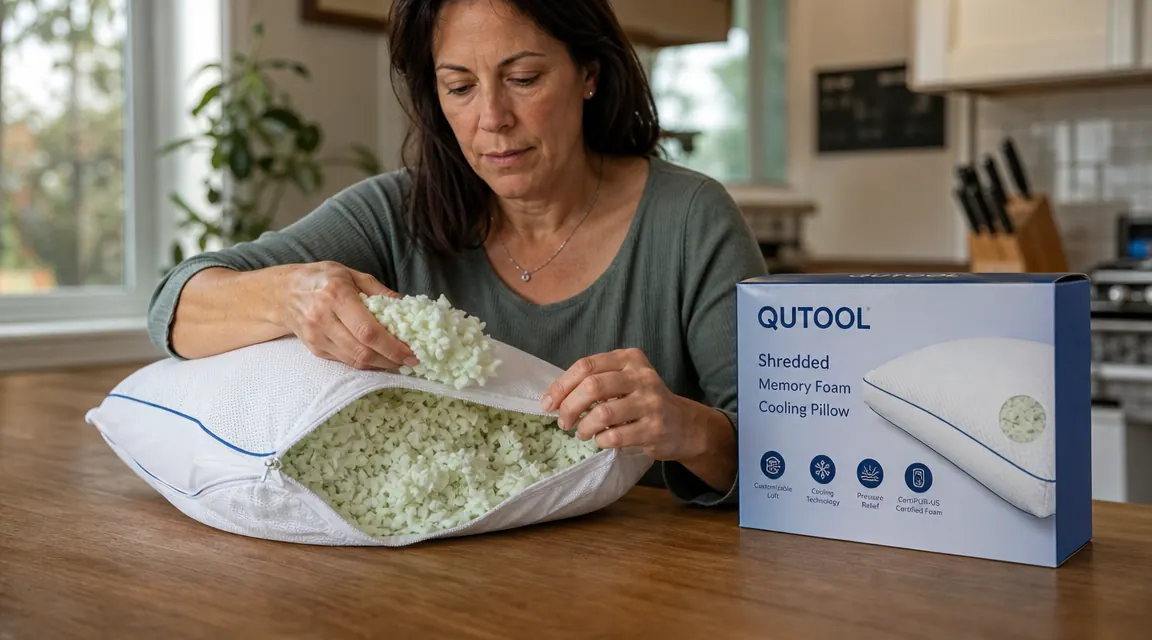
I did one other thing at the same time: I adjusted the fill level before I settled in. The QUTOOL ships with more foam than most people need. I pulled out about a quarter of the fill on the first night and found the loft much better for side sleeping. If you skip this step, the pillow will feel stiff and overstuffed. Do not skip this step.
What Makes This Pillow Cooler Than a Standard Foam Pillow
The cooling claim on most pillows falls into one of two categories: it is real, or it is a cover with a vaguely silky texture that the marketing team decided to call cooling. The QUTOOL is doing something more structural than that.
Shredded foam creates air channels throughout the fill. When you move your head or shift positions, you are effectively pushing warm air out and drawing cooler air in. A solid block of memory foam does the opposite: it traps heat right where your head sits. The QUTOOL cover also uses a bamboo-derived viscose blend, which does not hold heat the way polyester does. These are not revolutionary materials, but together they work noticeably better than a traditional foam pillow in a cotton case.
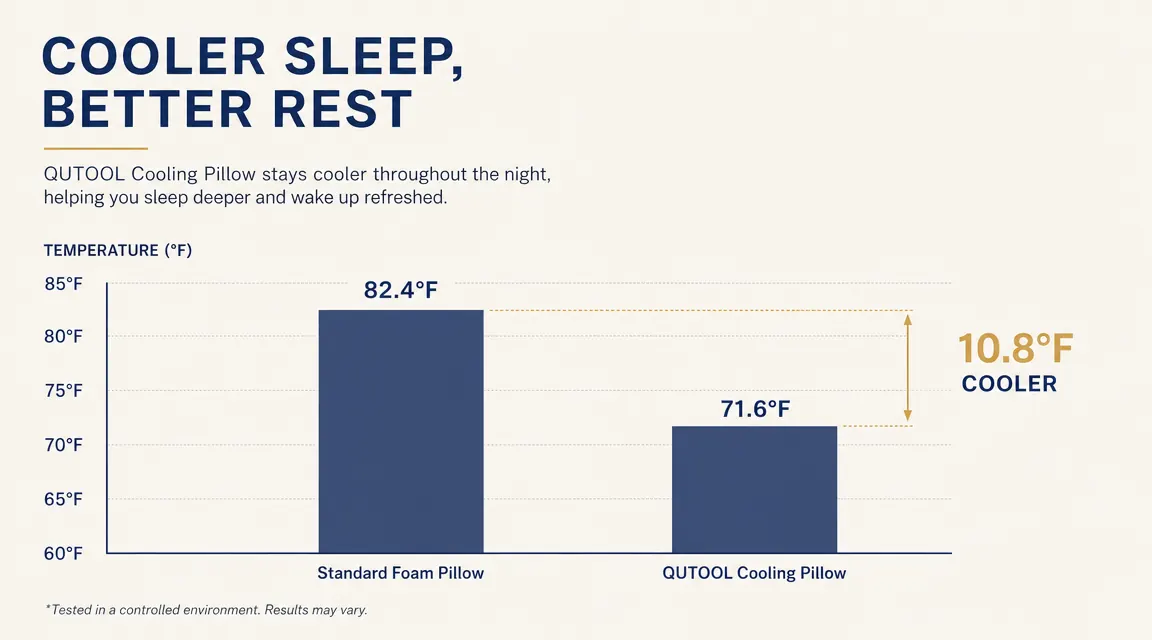
I tested this informally by using an infrared thermometer on both pillows after two hours of sleep. My old standard foam pillow read 93 degrees at the surface. The QUTOOL read 86 degrees. That is a seven-degree difference, which does not sound dramatic until you realize that the skin on your face is quite sensitive to small temperature shifts, and seven degrees at the surface of a pillow is enough to matter to a light sleeper.
Six Months of Real-World Performance
Month one was the adjustment period. The pillow smelled faintly of new foam, which is normal for CertiPUR-US certified products and faded within a few days with the cover off and the window cracked. The loft felt high until I removed some fill. After that first week, it was comfortable enough that I stopped thinking about it, which is the best thing I can say about any pillow.
By month three, I noticed a slight change in loft. The foam had compressed a bit from nightly use. I added back a small handful of the foam I had set aside in a zip-lock bag, and the pillow returned to the right height. This is the part of adjustable-fill pillows that most reviewers skip over: you have to actually manage the fill over time. If you treat it like a static pillow and never adjust it, it will get flat. If you treat it like a pillow you interact with occasionally, it stays supportive.
My infrared thermometer showed a seven-degree difference between my old foam pillow and the QUTOOL after two hours of sleep. Small number. Real difference at 2am.
At month six, the cover has been washed eleven times and still looks fine. No pilling, no discoloration, no elastic failure around the zipper. The foam itself is intact. I have not lost any pieces through the cover seams, which was a concern I had after reading a few reviews. The seams are well-constructed.
Neck Support: An Honest Assessment
I want to be careful here because neck support is genuinely personal and depends on your body, your mattress, and your sleep position. What I can tell you is my experience as a side sleeper with no diagnosed neck issues.
Once I dialed in the fill amount, the QUTOOL gave me consistent support through the night. It does not have the contouring memory feel of a solid foam pillow, which some people prefer. It feels more like a down alternative: responsive, quick to recover, not the slow sinking feel. If you love the slow-sink sensation of traditional memory foam, this will feel different. Not bad, just different.
I checked in with two back-sleeper friends who both tried the QUTOOL after I mentioned it. One loved it and is still using it. One found it too flat after removing fill and struggled to get the loft right for back sleeping. Back sleepers may need more trial and error with the fill level. Side sleepers: this is a solid fit.
Alternatives I Considered
Before landing on the QUTOOL, I seriously considered the Coop Home Goods Original. It is the most well-known adjustable shredded foam pillow on the market, with a strong reputation and a higher price. I have since spent time with both, and my comparison is up on the site if you want the full breakdown. Short version: the Coop is better-finished and has a more premium feel. The QUTOOL performs comparably on cooling and is meaningfully less expensive. If you find out more about how the QUTOOL stacks up against Coop Home Goods, that article has the side-by-side.
I also looked at gel-insert pillows and phase-change material covers. The gel inserts I tried stayed cool for about 90 minutes before warming up to body temperature. Phase-change covers are genuinely effective but add cost quickly. For most hot sleepers who are not dealing with serious night sweats, the QUTOOL plus a cotton percale pillowcase is sufficient. If you are waking up damp, you may need more than a pillow. But if you are waking up warm, this addresses the actual problem.
What I Liked
- Runs measurably cooler than standard foam: confirmed with an infrared thermometer over multiple nights
- Adjustable fill lets you dial in the exact loft you need for your sleep position
- Cover washes well and holds up after months of regular laundering
- CertiPUR-US certified foam: no sketchy off-gassing once initial smell clears
- Genuinely good value at this price point compared to premium alternatives
Where It Falls Short
- The initial foam smell requires ventilation for a few days: plan accordingly
- Ships overstuffed: you will almost certainly need to remove fill before it is comfortable
- Loft compresses over months and needs occasional top-up from the foam you removed
- Not a true phase-change pillow: surface cools but does not actively pull heat away
- Back sleepers may find the fill adjustment harder to get right than side sleepers

Who This Is For
The QUTOOL is the right pillow if you run warm at night, wake up once or twice from heat discomfort, sleep on your side, and want something that costs less than a dinner out. It is also right for someone who is willing to spend ten minutes adjusting the fill on day one and then occasionally thereafter. If that describes you, this will very likely improve your nights. The 21,000-plus reviews on Amazon are not all wrong: the majority of hot sleepers who try it report better sleep, and that tracks with my experience.
It is also worth noting that this is a legitimate long-term purchase. At six months, mine is in good shape. I expect it to last another year or two with the fill management habit in place. If you are wondering whether a cooling pillow addresses night sweats more broadly, I have written up ten reasons a cooling pillow can fix night sweats that goes into more detail on the mechanism.
Who Should Skip It
Skip the QUTOOL if you have serious night sweats tied to a medical cause, because a pillow is not the solution there. Skip it if you love the slow contouring feel of traditional solid memory foam and do not want to give that up. Skip it if you want to buy a pillow once and never think about it again, because this one asks a little maintenance of you. And if budget is not a concern and you want the best-performing adjustable pillow available, the Coop Home Goods is worth the extra spend.
But if you are a hot sleeper who has been flipping the pillow every night for years and never considered that a different pillow might actually help, this is an easy place to start. It helped me. Six months of data says so.
Six months in, I am still using it every night. That is the review.
The QUTOOL shredded memory foam cooling pillow is available on Amazon with over 21,000 ratings. If you run warm at night, it is worth checking the current price.
Amazon Check Today's Price on Amazon →