

I know what your nights look like. You climb into bed tired, genuinely tired, and then spend the next 45 minutes performing a full-body audit of every thought you had that day. You flip to your left side, then your right, then onto your back, which you know does not actually work for you but you try it anyway. At some point you check the time, realize it is almost midnight, and the anxiety about being tired tomorrow makes everything worse. You have probably tried the warm chamomile, the magnesium gummies, the blue light glasses, the 4-7-8 breathing technique. Maybe some of them helped a little. None of them solved it. The tossing and turning is still there because none of those things address the actual problem: your nervous system is running hot and nothing is telling it to stand down.
A weighted blanket works differently. The deep-pressure stimulation it provides activates the parasympathetic nervous system, which is the part responsible for telling your body it is safe to rest. It is the same mechanism behind swaddling infants or the feeling of being held. The trick is that most people use a weighted blanket exactly the wrong way and then conclude it does not work. This guide is the protocol I worked out after testing the YnM weighted blanket, one of the most purchased weighted blankets on Amazon with more than 49,000 ratings, over several months. Done right, the difference shows up within the first week.
Still lying awake an hour after lights-out? Here is the blanket that changed that for me.
The YnM 15 lb weighted blanket uses premium glass beads stitched into small, even pockets so the weight distributes across your whole body, not just your feet or torso. It is the one I recommend starting with if you have never used a weighted blanket, and the one I still use myself.
Amazon Check Today's Price on Amazon →Before You Start: Choose the Right Weight
Step 1: Pick a blanket that is 8 to 12 percent of your body weight
This is the single most common mistake. People buy whatever size seems heavy or whatever is on sale, then wonder why they wake up feeling either pinned down or completely unaffected. The target range is 8 to 12 percent of your body weight. If you weigh around 130 pounds, a 12 lb blanket is your floor. At 150 to 175 pounds, the 15 lb blanket is the sweet spot. At 180 to 220 pounds, go to 20 lb. I am 148 pounds and the 15 lb YnM blanket is the one I use. Below that threshold I felt the pressure but did not get the full nervous-system response. Above it I felt restricted in a way that made me more restless, not less.
The YnM blanket comes in several weight options at the same price, which is useful because you do not have to guess and then buy again. If you are genuinely between two weights and run warm at night, go lighter. If you are a cold sleeper or someone who feels comforted by a heavy comforter, go heavier. There is no universally correct answer here; the guideline just gets you into the right neighborhood.
Step 2: Set up your sleep environment before the blanket goes on
The weighted blanket is not a stand-alone fix if your room is 74 degrees and your phone is still glowing on the nightstand. Lower the room temperature to somewhere between 65 and 68 degrees Fahrenheit before you get into bed. This range is when your core temperature drops naturally as part of the sleep onset process, and a cooler room accelerates that. The YnM blanket has glass beads rather than plastic pellets, which stay cooler, but any weighted blanket will add some warmth. Compensating with a cooler room is part of the protocol, not optional.
Phone goes face-down or in another room entirely. I know you have heard this before. I am telling you again because the blanket creates a calm physiological state and the phone immediately undoes it. A single two-minute scroll through email at 11pm is enough to spike your cortisol back up. The weighted blanket protocol only works if you let it work. Give it that.
If you share a bed with a partner who keeps different hours, get a blanket that covers only your half of the bed. The YnM blanket comes in twin size specifically for this reason. You do not need to cover both people, and trying to use a king-size blanket as a shared weighted blanket defeats the purpose because the weight per square inch drops too low to be effective for either person.
Step 3: Pull the blanket all the way up to your chin for the first 20 minutes
Most people use a weighted blanket the way they use a regular duvet: draped loosely from the waist down, or just over their legs. That produces mild comfort but not the deep-pressure stimulation you are after. To activate the parasympathetic response, the pressure needs to cover your torso, chest, and ideally your shoulders. Pull the blanket all the way up to your chin when you first get into bed. Leave it there for at least 20 minutes.
Yes, this feels a little strange at first, especially if you have always slept with your arms outside the covers. Give it three nights before you decide it is not for you. The novelty of the sensation is not the same as the sensation being wrong. By night four, most people stop noticing it and just feel settled. By night seven, many notice they are reaching for it before they even realize they are doing it.

Step 4: Do not fight the stillness, let the blanket do the work
Here is the part nobody talks about. When you first lie under the blanket and feel the weight settle, your instinct if you are a restless sleeper may be to shift, to adjust, to find the right position. Resist that for the first ten minutes. The deep-pressure effect accumulates: the longer the weight stays evenly distributed across your body, the more the nervous system reads it as a signal to downregulate. Every time you roll over, you reset part of that process. You do not have to be perfectly still all night. But staying intentionally still for the first ten to twenty minutes, while breathing slowly, dramatically speeds up sleep onset.
Pair this with slow exhalations. A four-count inhale followed by a six or eight-count exhale activates the vagal brake, which is a fast pathway to slowing your heart rate. Combined with the pressure from the blanket, the two signals reinforce each other. I find that most nights I am asleep before I even finish the breathing exercise, which is a first in about a decade of poor sleep.
Step 5: Troubleshoot the first two weeks before you give up
The two most common complaints I hear from people who tried a weighted blanket and quit are: it ran too hot, and it felt claustrophobic. Both are solvable. If it runs hot, switch to a lighter-weight option and drop your room temperature another two degrees. The YnM glass beads do not retain heat the way poly-fill or cotton batting does, but if you are a genuinely hot sleeper in a warm room, the blanket alone cannot overcome the environment. Cool the room first, then assess.
If it felt claustrophobic, you probably pulled it over your face or your arms were trapped under too much weight. Try covering only from mid-chest to your feet and keeping your arms free above the blanket. Some people never come around to the full-body coverage but still get significant benefit from the torso-down approach. The goal is a nervous system response, not a specific position.
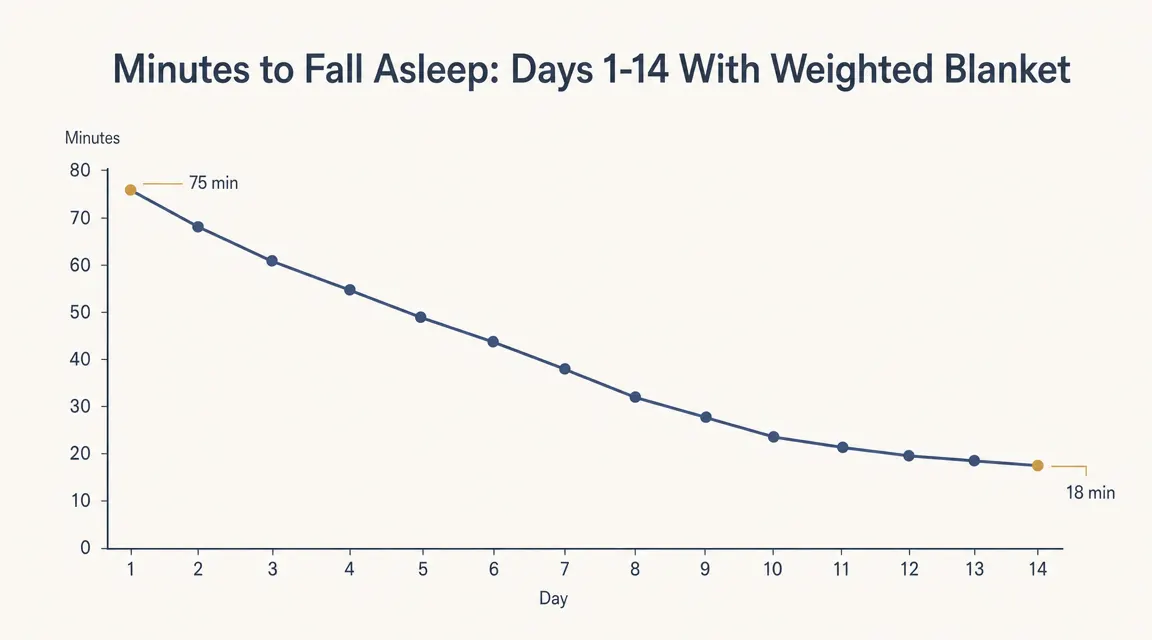
Give the protocol two full weeks before drawing conclusions. Sleep is partly habitual, and your body needs time to associate the blanket's weight with the signal to rest. Most people see a noticeable shift in sleep onset time between days five and ten. By two weeks, it is usually clear whether this is working for you. In my testing, I went from an average of about 65 minutes to fall asleep down to around 20 minutes by the end of the second week. That gap is real, and it is the reason I kept using the blanket rather than rotating it out for the next thing.
By night seven, most people stop noticing the weight and just feel settled. By night ten, many are reaching for it before they even realize they are doing it.
What Else Helps
The weighted blanket is the anchor of this protocol, but a few things around it make a real difference. First, consistency of bedtime matters more than most people admit. Your circadian rhythm is not a suggestion; it is a physiological clock that depends on regularity. Going to bed within 30 minutes of the same time every night, even on weekends, makes every sleep aid work better, including this one. Second, if anxiety is a significant driver of your restlessness, it is worth reading through the science behind why pressure helps with that specifically. I covered it in more depth in a separate piece on the 10 reasons weighted blankets help with sleep anxiety, which goes into the research behind why this works rather than just how to use it. Third, if you want a full picture of long-term results with the specific YnM blanket, including what wore out after several months of use and how the glass beads held up through multiple washes, the long-term YnM review has everything.
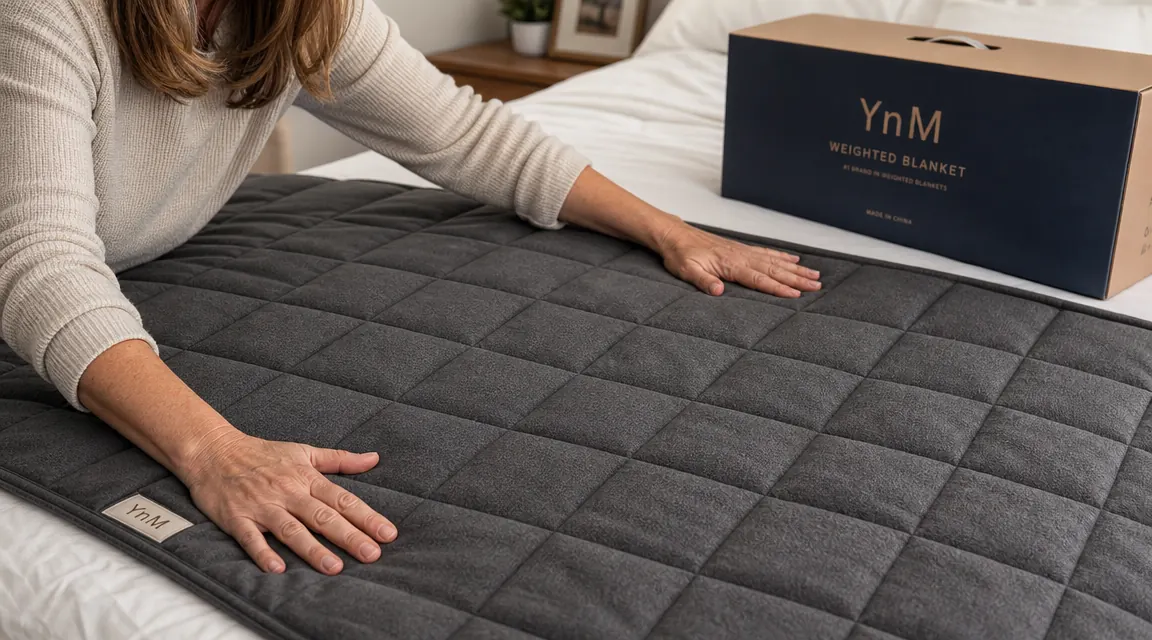
One thing I would skip: the heavily marketed weighted blanket alternatives that use knit or woven construction without internal beads. They look good in photos and have real aesthetic appeal, but the weight distribution is uneven and the deep-pressure response is inconsistent. For the protocol above to work, you need even, predictable pressure across your torso. That requires an inner layer of beads or pellets stitched into individual pockets. The YnM design has 7-layer construction with a grid of small pockets specifically so the beads cannot migrate to one side while you sleep.
Ready to stop the midnight ceiling-stare? The YnM 15 lb blanket is where I would start.
Rated 4.6 out of 5 by more than 49,000 people who bought it. The glass-bead construction is what makes the even pressure distribution possible, which is what makes the protocol above actually work. Multiple weight options at the same price point so you can pick the right one for your body weight.
Amazon Check Today's Price on Amazon →