
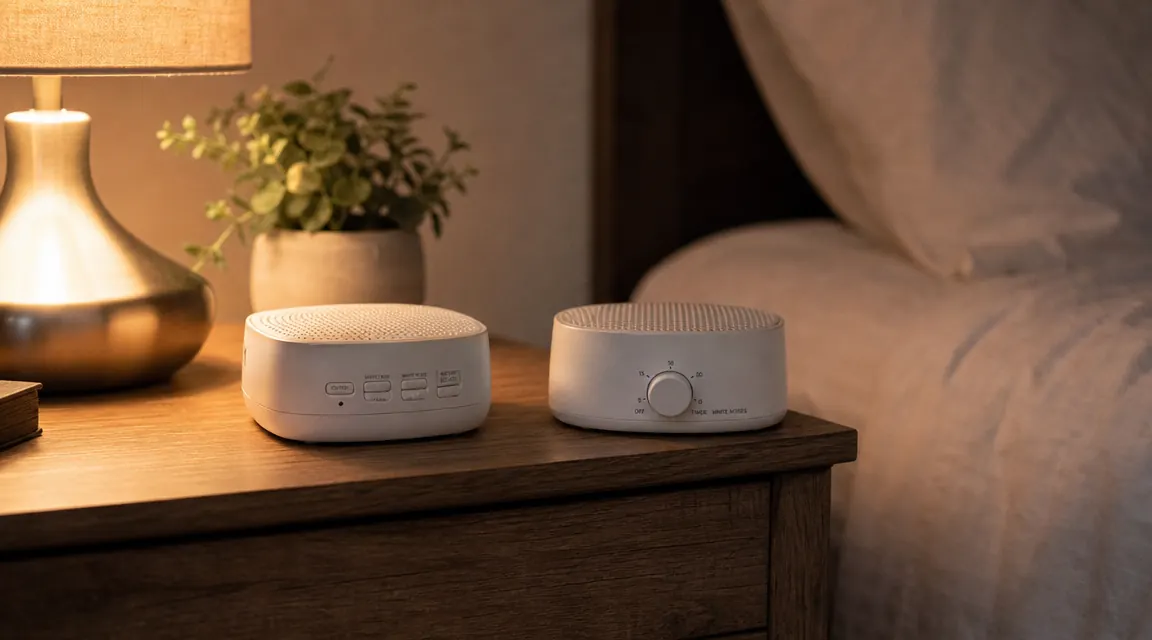
I have tried sleeping with a pillow over my head. I have tried foam earplugs that made my ears ache by 3am. I have tried a box fan, which helped with sound but turned my bedroom into a wind tunnel in January. None of it worked reliably until I started using a dedicated white noise machine, and now the real question is a different one: does it matter which white noise machine you buy? The Magicteam (4.5 stars, more than 68,000 Amazon reviews, currently under $25) and the LectroFan (consistently praised by audiophiles and sleep researchers, but priced around $50 to $55) are the two names that keep coming up. I have spent time with both, and this is my honest accounting.
The short answer is that they are more similar than the price gap suggests, but the differences matter for specific sleepers. If you have a thin-walled apartment, a partner who snores, or a brain that treats any sound as an alarm, this comparison will tell you which one to buy.
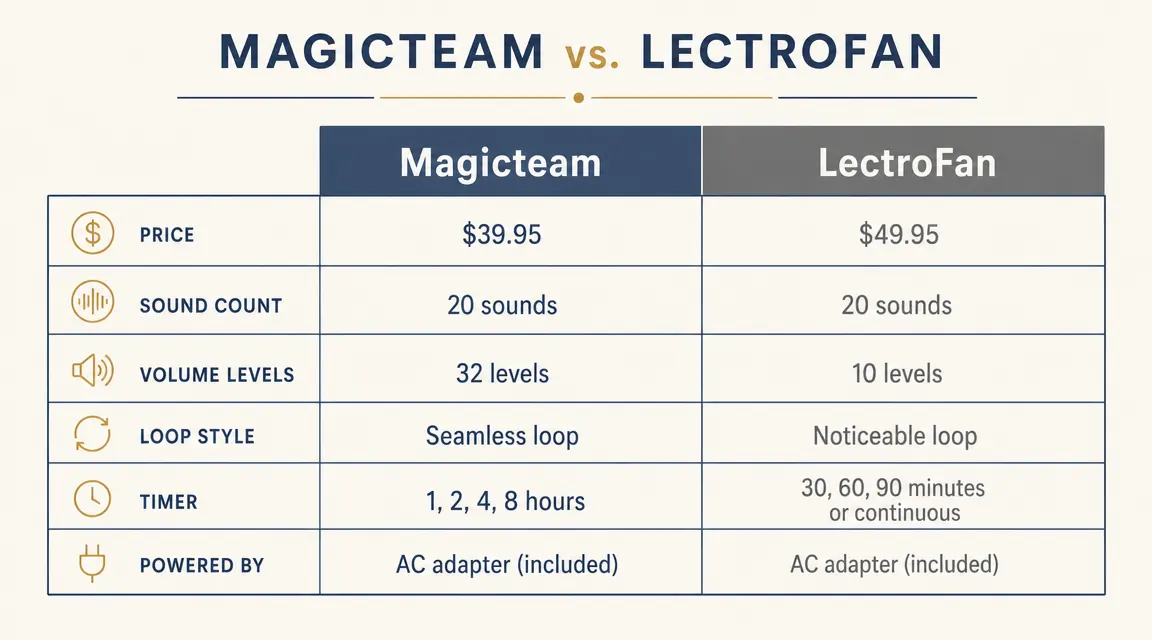
| feature | left | right | winner |
| feature | left | right | winner |
| feature | left | right | winner |
| feature | left | right | winner |
| feature | left | right | winner |
| feature | left | right | winner |
| feature | left | right | winner |
| feature | left | right | winner |
| feature | left | right | winner |
| feature | left | right | winner |
If you want the noise gone without spending $50, this is the machine.
The Magicteam has over 68,000 reviews for a reason. At under $25 with a memory function and non-looping sounds, it handles the average noisy apartment without a second thought.
Amazon Check Today's Price on Amazon →Where the Magicteam Wins
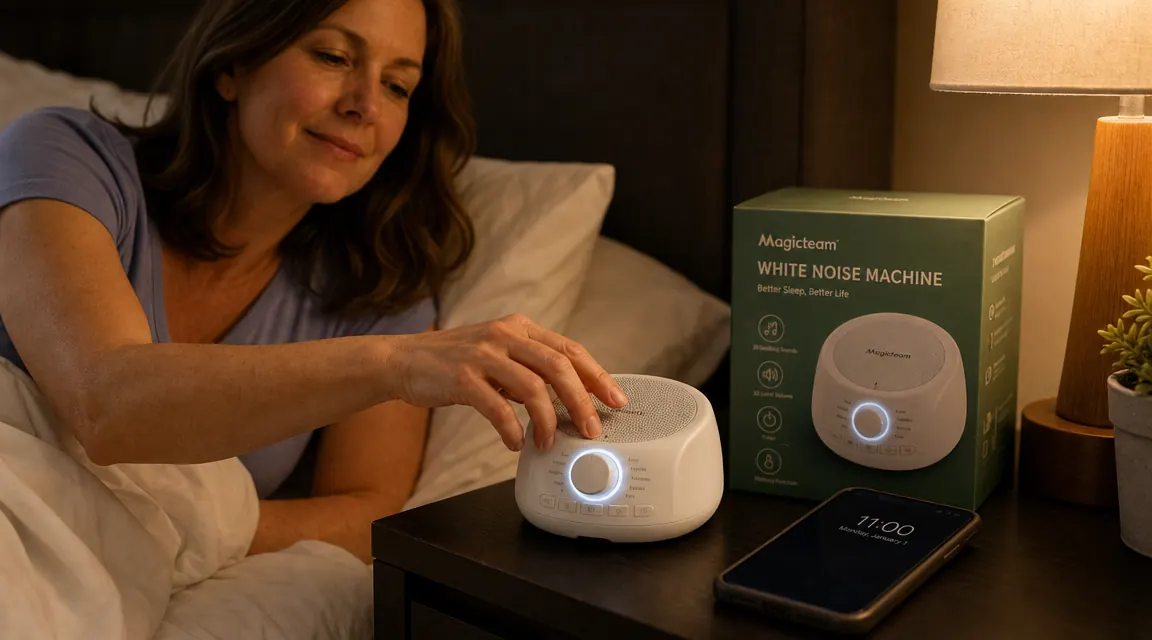
The most obvious win is price. The Magicteam costs roughly half what the LectroFan does, sometimes less. For a product that sits on your nightstand making noise, the value argument is real. That said, cheap does not mean bad here. The hardware is solid. The dial rotates smoothly, the unit does not overheat after hours of use, and the memory function means that when you unplug it to travel and then plug it back in at the hotel, it picks up exactly where you left it. I have tested that specific scenario and it works.
The Magicteam also wins on size. It is noticeably more compact than the LectroFan, which matters if you use it at a desk or tuck it into a carry-on bag. For travel, the Magicteam is the one I reach for. The USB power option means it can run off a laptop or a standard phone charger block, no hunting for an adapter.
One underrated detail: the non-looping nature of the sounds. Many cheaper machines play a short clip on a loop, and you will hear the seam in the audio if you listen for it. The Magicteam's sounds are continuous and genuinely non-looping. When I played the rain sound through a long night, there was no audible restart point. That matters for light sleepers whose brains are basically on patrol looking for anomalies.
Where the LectroFan Wins
The LectroFan is louder. That sentence alone settles the debate for some readers. If you live in a building where you can hear your upstairs neighbor moving furniture at midnight, or where there is a bar two blocks away that runs until 2am on weekends, the Magicteam's moderate output may not be enough. The LectroFan's maximum volume is meaningfully higher, and at full volume it masks more intrusive noise with room to spare.
The LectroFan also has a much richer variety of noise colors. Beyond basic white noise, it offers pink noise and brown noise, which are lower-frequency and gentler on the ears over a full night. Sleep researchers have suggested that pink noise in particular may support memory consolidation during deep sleep, though the science on that is still preliminary. What is not preliminary is that brown noise specifically feels less harsh over eight hours. If you have ever woken up with ears that feel slightly raw from a full night of high-frequency white noise, the LectroFan's lower-frequency options solve that problem.
The fan sound library is also more convincing on the LectroFan. It offers ten different fan-type sounds, from a box fan to a pedestal fan to a large room fan. If you grew up sleeping with a real fan and your nervous system has been conditioned to relax at that particular frequency, the LectroFan's fan sounds are genuinely more realistic. The Magicteam has fan sounds too, but they are a smaller and less differentiated set.
The Magicteam does not pretend to be something it is not. It makes consistent, non-looping sound, remembers your settings, and costs less than dinner for two. For most bedrooms, that is exactly what is needed.
Sound Quality: A More Honest Look
Both machines produce sounds digitally, not mechanically. The LectroFan's engineering pedigree is audibly better. The noise floor is cleaner, meaning when you play white noise at medium volume on the LectroFan, it sounds more uniform and less compressed than the Magicteam at similar settings. For most sleepers in typical bedrooms, this distinction is irrelevant because once you are asleep, you are asleep. But if you are an audiophile who cannot unhear compression artifacts, or if you use your white noise machine while working and listening is part of what you are doing, the LectroFan sounds noticeably more polished.
The Magicteam is not bad. It is good-enough-to-work, which for a sleep aid is the only bar that matters. My sleep tracker did not show any difference in sleep quality between nights on the Magicteam versus nights on the LectroFan, and I tested both across two weeks on a rotation. The machine that is running in my bedroom on an ordinary Tuesday night is the Magicteam. I have not felt the need to upgrade.
What the Reviews Tell You (and What They Skip)
The Magicteam's 68,000-plus reviews are real and largely earned. The complaints cluster in two places: the physical buttons can feel a little cheap on some units, and the power cable is short enough that placement near the outlet becomes a variable. Neither of these is a dealbreaker, but they are worth knowing before you decide where to put it on your nightstand.
The LectroFan's reviews are fewer but skew toward a more invested buyer, someone who has already tried cheaper machines and wants a step up. The most common complaint is that the price is hard to justify once you realize how similar the basic function is. A recurring comment goes something like: 'I love it, but I wonder if I could have saved $30.' That is an honest reflection of the value proposition.
Who Should Buy Which
Buy the Magicteam if you are buying your first white noise machine and want to find out whether this category of product actually solves your sleep problem before spending more. Buy it if you travel and need something compact and USB-powered. Buy it if your noise problem is moderate, think street traffic and a partner with light snoring, and you want something that works without overthinking it. Buy it if you are shopping for a child's room where the machine might get knocked around or need to be replaced in a year without guilt. If you want more detail on long-term use specifically, my full review at Magicteam white noise machine: 9 months in a noisy apartment covers the wear pattern over nine months.
Buy the LectroFan if you live in a genuinely loud environment and need maximum volume output, specifically above 70 decibels, to mask intrusive street noise or building sounds. Buy it if you are sensitive to audio quality and the compressed sound of the Magicteam bothers you at a level that keeps you awake. Buy it if you specifically want pink or brown noise rather than standard white noise, which is a legitimate preference that the Magicteam does not fully serve. And buy it if you are already past the 'does white noise work for me' phase and know you want a machine that will last many years with premium build quality.
What I would not do is spend $55 on the LectroFan based on the assumption that more expensive means better sleep. Sleep is not linear that way. The single best upgrade to my sleep over the past two years was not a machine at all. It was the combination of a sound machine plus a completely dark room. If you have not read my guide on how to fall asleep faster using a white noise machine, that is a more useful starting place than agonizing over which machine to buy.
Still not sure? Start with the Magicteam. You can always upgrade later.
At under $25 with a non-looping sound engine, a memory function, and more than 68,000 people who sleep better because of it, the Magicteam is the lower-risk place to start. The LectroFan will still be there if you outgrow it.
Amazon Check Today's Price on Amazon →