
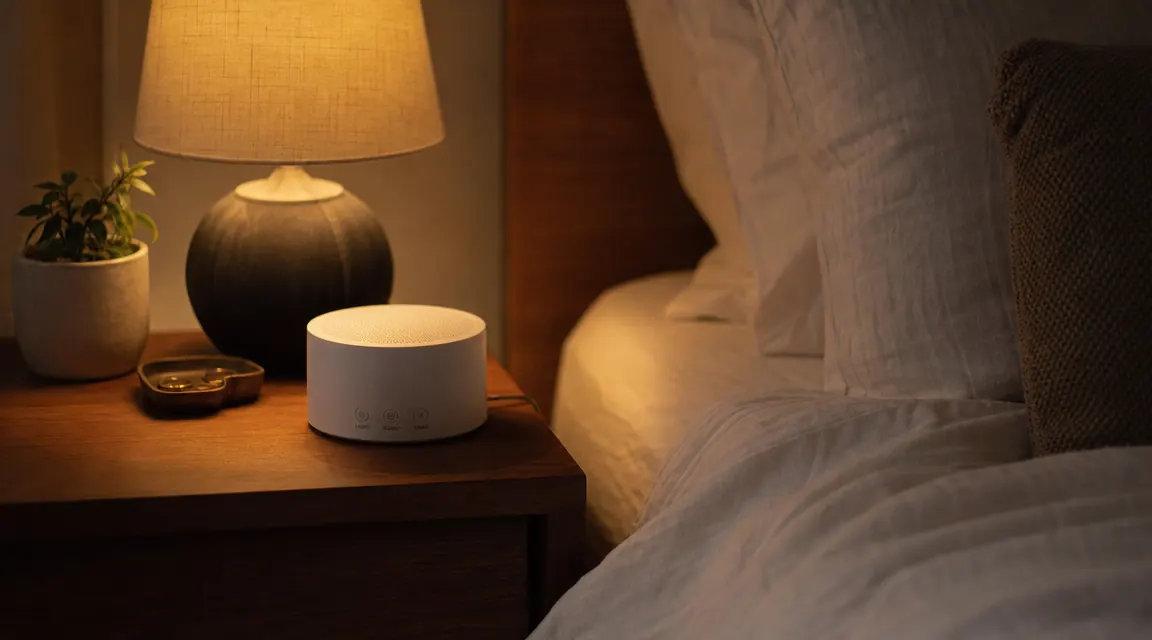
For three years after my second kid was born, I turned falling asleep into a part-time job. Herbal tea at 9pm. Phone in another room by 9:30. Magnesium glycinate at 10. White noise app on my phone, which would either loop with an audible click or drain my battery and cut out at 2am. I was doing everything right and still lying awake at 11:15 cataloging tomorrow's problems. The issue wasn't my routine. It was that I was relying on tools that couldn't hold up all night.
A white noise machine fixes the specific thing those workarounds can't: it creates a stable, continuous audio environment that masks incoming sounds before they reach your brain's threat-detection system. No loops. No battery drain. No cut-outs. This guide walks through exactly how to set one up so it actually works, not just on night one but on night 60.
Still lying awake listening to your neighbors, the street, or your own thoughts? The Magicteam has 20 non-looping sounds and runs all night on wall power.
It is the most-reviewed white noise machine on Amazon for a reason: 68,000 people bought it because nothing else was sticking. See today's price before you read another sleep tip.
Amazon Check Today's Price on Amazon →Step 1: Choose the Right Sound for Your Specific Problem
Not all white noise is created equal, and using the wrong sound is the most common reason people give up on these machines after two nights. White noise is a flat, broadband hiss. It masks a wide frequency range, which makes it effective for voices, traffic, and TV sounds coming through walls. Brown noise sits lower and has a rumbling, rushing quality, closer to a strong fan or a waterfall. A lot of people who say they 'don't like white noise' actually do fine on brown noise because it feels less harsh.
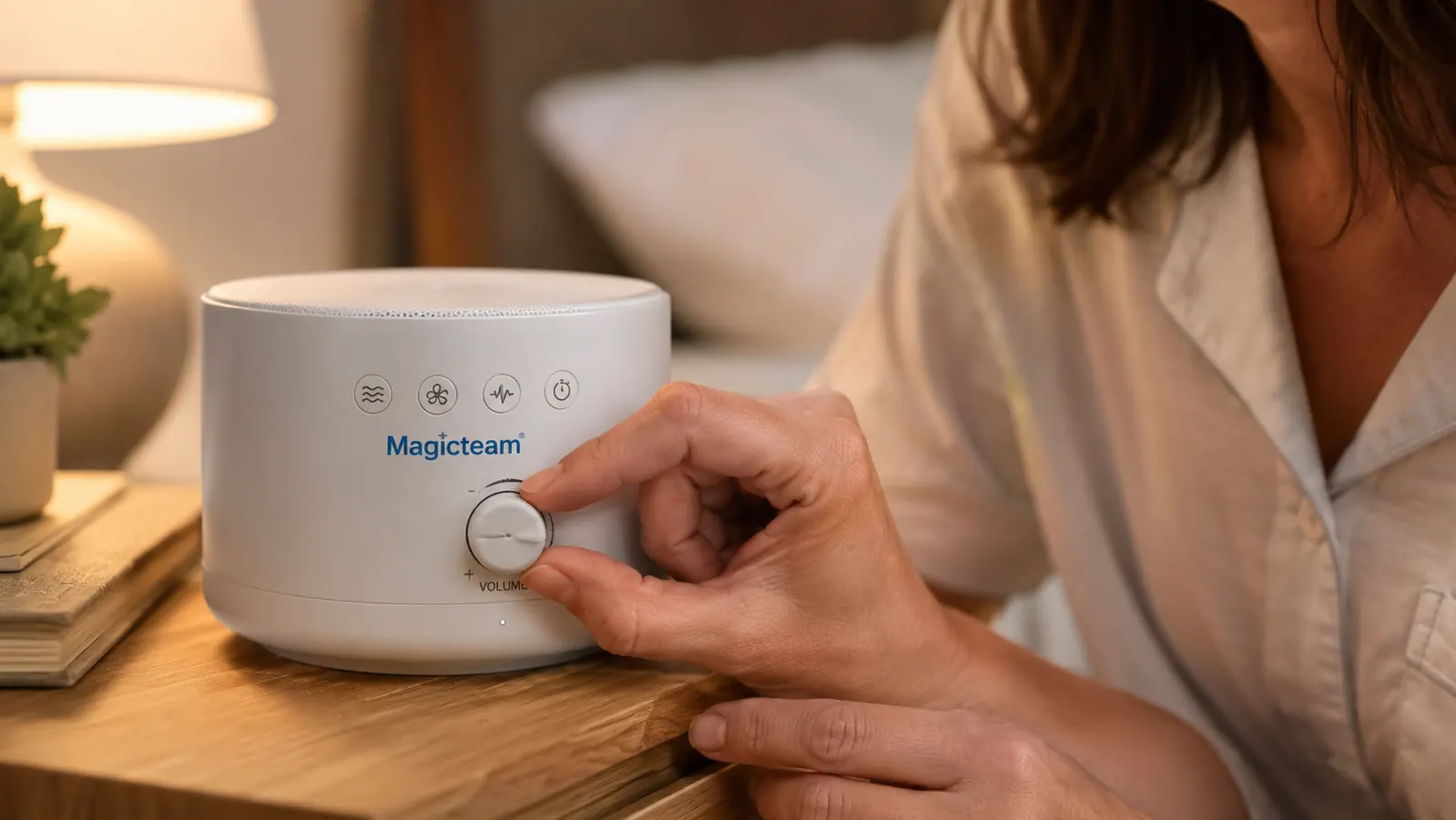
The Magicteam Sound Machine has 20 sounds: pure white noise, brown noise, fan sounds, rain, brook, ocean, campfire, and several others. Start with white noise or brown noise for noise-masking purposes. If you share a bedroom with someone and one of you runs hot while the other is cold on room temperature, the fan sound is a good middle ground because it psychologically signals airflow without you actually needing to run a fan all night. Do not start with ocean or rain sounds. They have rhythmic variation, which the brain tracks rather than tunes out.
Spend two nights on white noise and two nights on brown noise. Whichever one you fall asleep faster on is your sound. You do not need to switch it up after that. Consistency is actually part of why this works: your brain starts associating that specific sound with sleep, and the transition into drowsiness happens faster over time.
Step 2: Place the Machine at the Right Distance and Height
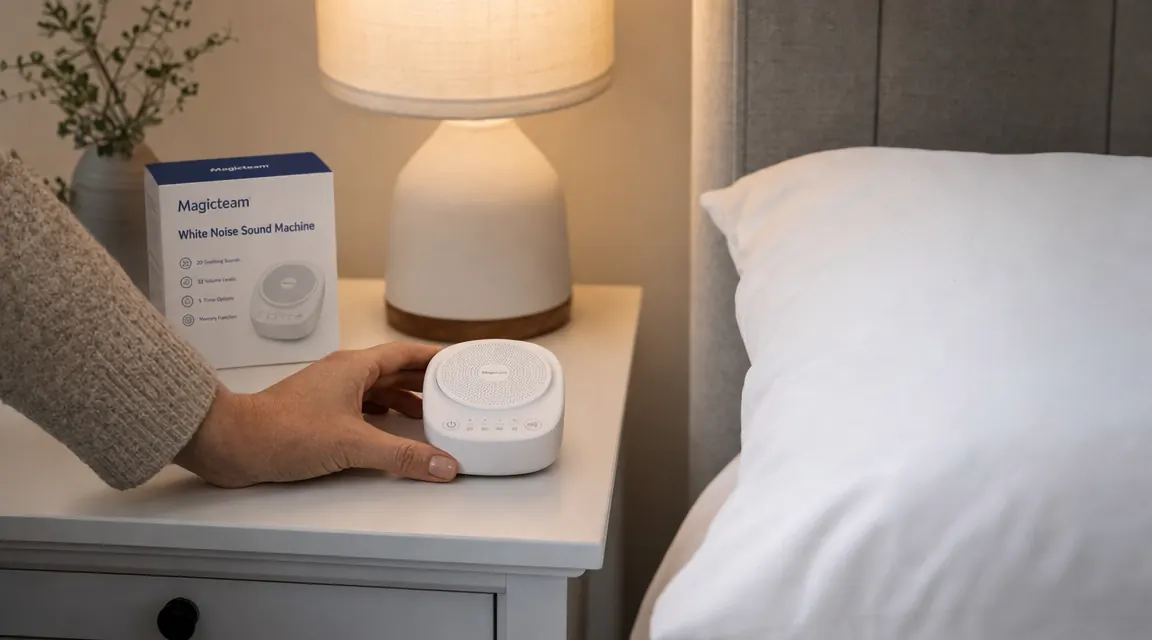
Placement matters more than most people expect. The goal is to create an even audio field around your head, not to blast sound directly at you. Put the machine on your nightstand, roughly 18 to 24 inches from your pillow, at roughly ear height if you can manage it. Do not put it on the floor. Sound dissipates quickly with distance, and you will end up running it louder than necessary to compensate, which creates a different problem.
If you share a bed and your partner is on the far side, position the machine at the foot of the bed or on the center of a shared headboard shelf, if you have one. The goal is for both of you to be within roughly three feet of the sound source. The Magicteam is compact enough (about the size of a large coffee mug) that it does not take up meaningful nightstand real estate.
One thing to avoid: putting the machine inside a drawer or on a shelf behind other objects. Some people do this to reduce visual clutter, but it significantly muffles the output and forces you to crank the volume. Leave it on an open surface.
Step 3: Set Volume to the Correct Level (This Is Not Intuitive)
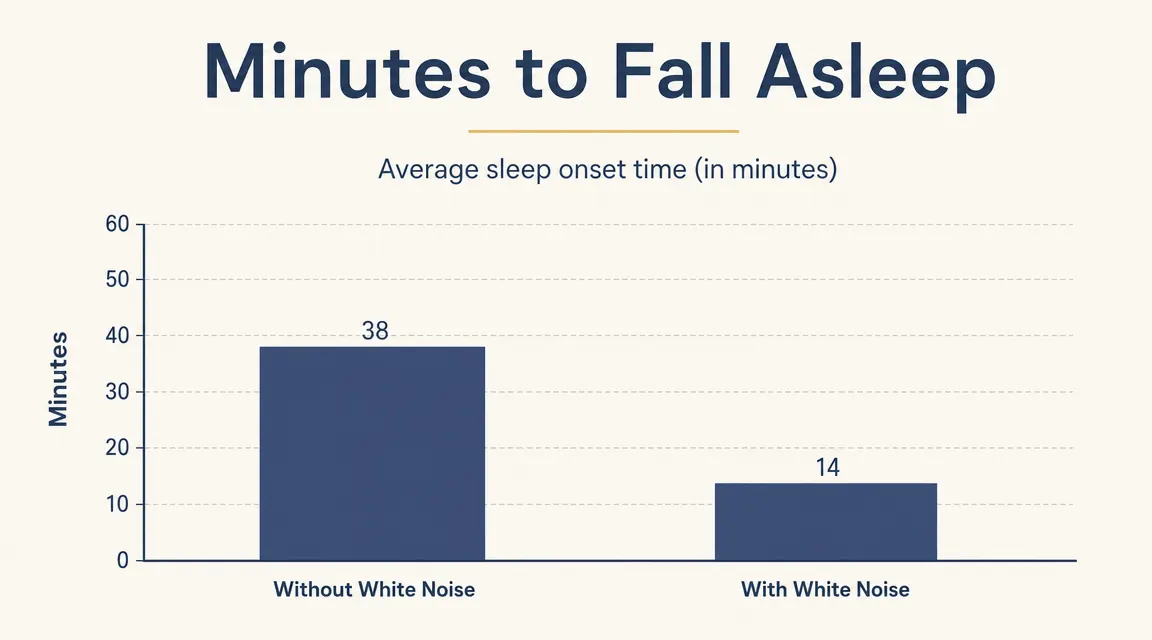
Most people set their white noise machine too quiet on the first night, decide it is not working, and turn it up halfway through the week until it is too loud. Here is the calibration method that actually works: start with the machine at whatever volume allows you to hear it clearly while lying in bed with your eyes closed. Then reduce it by two clicks. That is your starting volume.
The reason: the goal is not to drown out sound. It is to raise the ambient noise floor in your room so that intermittent sounds, a car outside, a dog barking, a neighbor's television, do not create a contrast spike that jars your nervous system. A sudden loud noise is startling. The same sound against a continuous 50-decibel background barely registers. You want enough volume to smooth over those spikes, not so much that the machine itself becomes the thing your brain focuses on.
The goal is not to drown out sound. It is to raise the ambient noise floor so intermittent sounds stop creating contrast spikes that jolt you awake.
For most people in a standard bedroom, that means running the Magicteam at about 40 to 50 percent volume. The machine has a wide range, and the upper end (which gets to around 85 decibels at close range) is genuinely too loud for sleep. You rarely need it above 60 percent.
Step 4: Run It on a Timer or All Night, Depending on Your Problem
The Magicteam has a built-in timer: 1 hour, 2 hours, and 3 hours. Whether to use the timer or run it all night depends on which sleep problem you are actually trying to solve. If your issue is sleep onset, meaning you lie awake for 30 to 60 minutes before falling asleep, the timer is fine. Set it for 90 minutes, which covers the first sleep cycle plus buffer, and let it shut off once you are under.
If your issue is 3am wake-ups, which was my actual problem for a long time, run it all night. Those wake-ups usually happen during a natural light-sleep phase, and any ambient sound spike during that window, a car alarm, an upstairs neighbor getting up for water, can tip you into full wakefulness. The machine needs to be running at that moment to do its job. The Magicteam has a memory function that remembers your last volume and sound setting, so it picks up exactly where you left off if you unplug and replug it.
Do not worry about becoming dependent on it. The research on this is actually reassuring. A white noise machine is not chemically altering your sleep architecture the way a sleep aid does. It is an environmental tool. If you travel and forget it, your first night will probably be rough in a noisy hotel, but your second night will be fine. The body adapts.
Step 5: Combine the Machine With One Other Change for Faster Results
A white noise machine is not magic on its own. It works best when the rest of your sleep environment is not actively fighting against it. The single most impactful pairing is light control. If you are running a white noise machine in a bedroom with streetlight coming through the curtains or a hallway light under the door, you are solving for half the problem. Your brain uses both sound cues and light cues to assess whether it is safe to go unconscious. Block both and the machine's effect compounds.
The second useful pairing is temperature. Sleep onset is triggered partly by a drop in core body temperature, and most adults sleep best somewhere between 65 and 68 degrees Fahrenheit. If your room runs warm, a white noise machine helps but cannot compensate for an overheated bedroom. Set the thermostat down or crack a window before bed. The fan sound on the Magicteam has a mild psychological cooling effect for some people, but it is not a substitute for actual cooler air.
You do not need to do all of this on night one. Just start with the machine and the correct volume. Add the blackout curtains or a sleep mask in week two if you are still waking up. Layer interventions one at a time so you know what is actually working.
What Else Helps
If you have the white noise setup dialed in and you are still not falling asleep within about 20 minutes, the problem is probably not your environment. It is your pre-bed wind-down. The most common culprit is looking at your phone in bed. Not because of the blue light, which is a real but overstated factor, but because scrolling is an input-seeking behavior that keeps your nervous system in a mild alert state. The phone goes in the charger in another room or face-down on the nightstand 30 minutes before you want to be asleep. That single change does more than most supplements.
For 3am wake-ups specifically, the approach that works alongside white noise is resisting the urge to check the time. When you look at the clock and see 3:07am, your brain immediately calculates how many hours of sleep you have left, which is a low-grade stressor. Flip the clock face away from the bed or use a phone alarm that hides the time on the lock screen. Combined with the white noise machine running, this removes two of the three most common triggers for the wake-up becoming a full 45-minute awake stretch.
For deeper reading on why white noise machines work mechanically, and what the sleep science actually says about sound masking, the article on 10 reasons a white noise machine improves sleep quality covers the research without turning into a textbook. And if you want the full long-term picture on the Magicteam specifically before you buy, the nine-month review from a loud apartment has the unfiltered version.
If you have made it this far, you are done researching. The Magicteam is the right call for most people at most budgets.
20 non-looping sounds, memory function so it remembers your settings, and compact enough to travel with. The setup takes about 90 seconds. Check today's price and decide.
Amazon Check Today's Price on Amazon →