
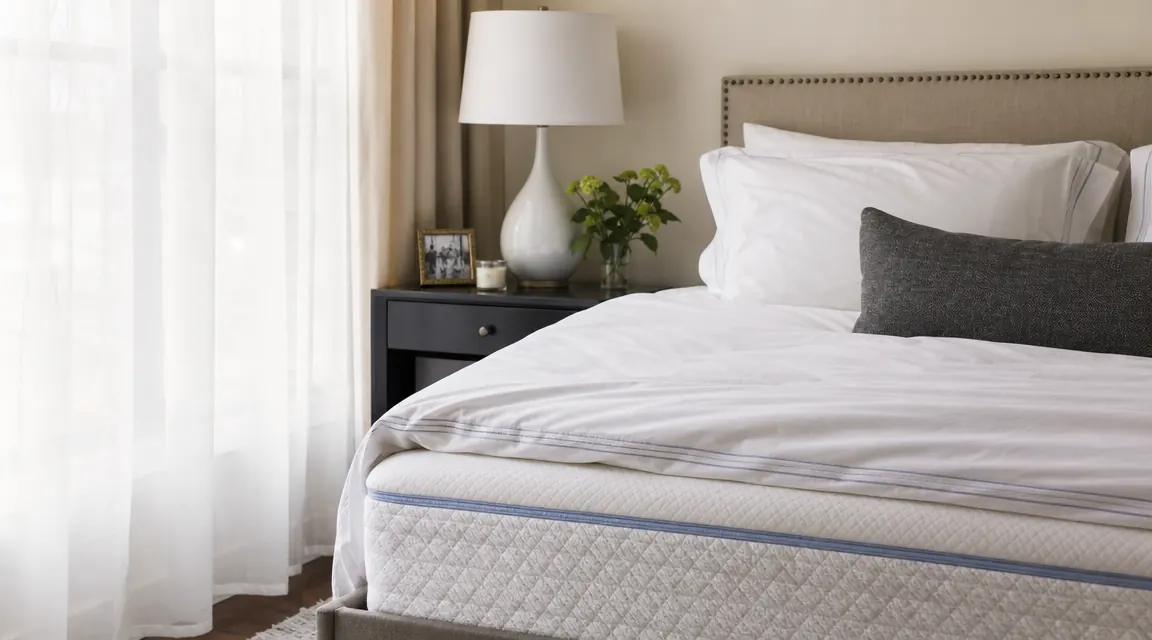
If you wake up at 2am with your shirt damp and your pillow flipped to the cool side for the third time, you already know the problem is not the thermostat. You have been dropping the room temperature, pushing off blankets, and buying cooling pillowcases for years. The real culprit is underneath you: a mattress that acts like a slow oven, absorbing your body heat and radiating it back up all night long.
A gel-infused memory foam mattress topper does not just add softness. It replaces the top few inches of your sleep surface with a material that pulls heat away from your body instead of storing it. The Linenspa 3-inch gel memory foam mattress topper has 133,000 Amazon reviews for a reason, and a significant chunk of those reviews are from people who, like me, were skeptical that a topper could solve what they thought was a body-chemistry problem. It is not a body-chemistry problem. It is a surface problem. Here is how to fix it.
Still waking up drenched? Your mattress is running hot, not your body.
The Linenspa 3-inch gel memory foam topper is the most-reviewed mattress topper on Amazon, rated 4.4 stars across 133,000 customers. It fits over your existing mattress in minutes, no new bed required.
Amazon Check Today's Price on Amazon →Step 1: Understand Why Your Current Mattress Traps Heat
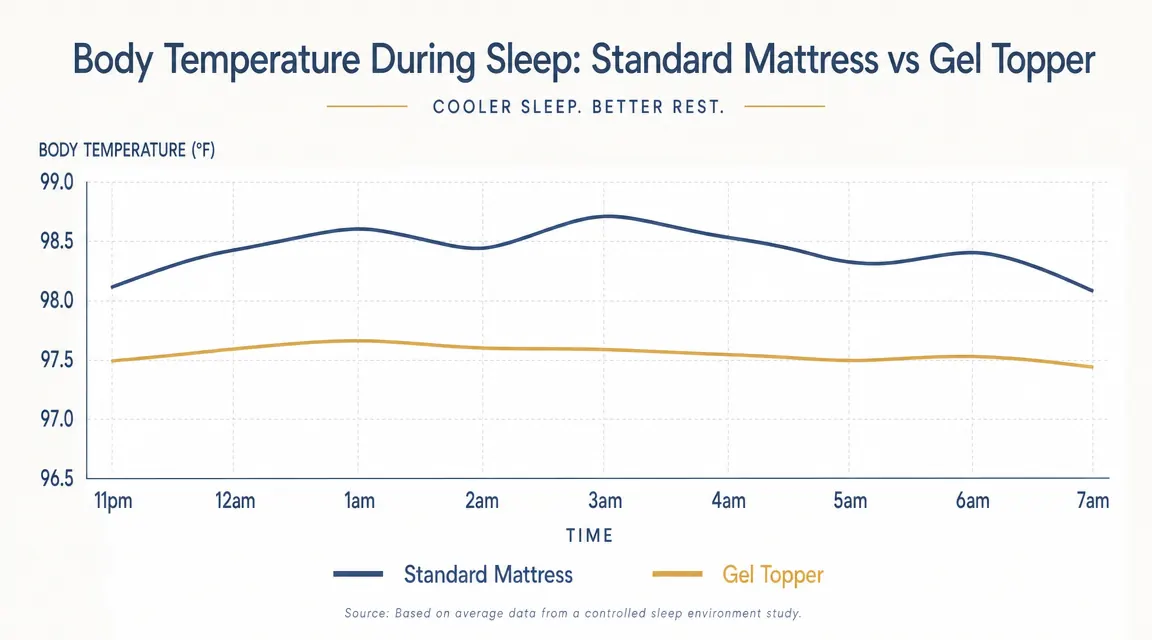
Traditional memory foam is a dense, viscoelastic material. That density is what gives it pressure relief, but it also makes it terrible at moving air. When you lie on it, your body heat has nowhere to go. It gets absorbed into the foam and slowly radiates back upward over the course of several hours, which is why you often feel fine at 11pm and then wake up overheated by 2am. The mattress was working against you from the moment you got in.
Innerspring mattresses breathe better, but many people have already moved to foam beds or have older hybrids where the coils are buried under several inches of foam. The surface layer, the part your body actually contacts, is almost always foam, and almost always heat-trapping. That is the layer you are replacing with a topper.
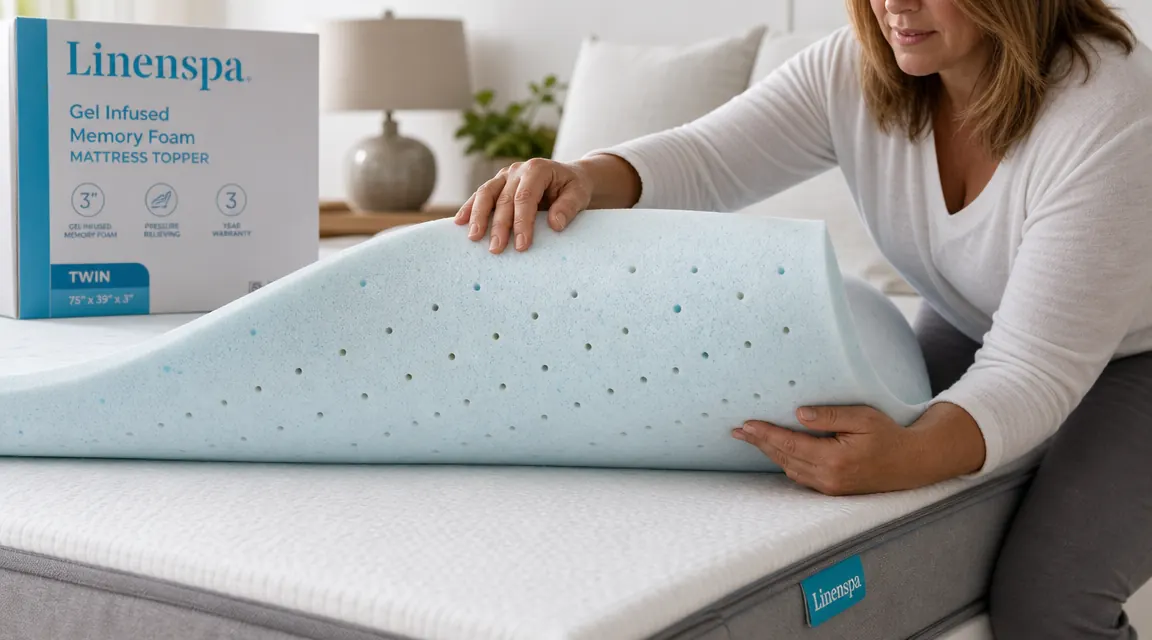
Gel-infused foam addresses this in two ways. First, gel particles embedded in the foam absorb heat rather than reflecting it, which slows the buildup. Second, good toppers like the Linenspa include ventilation channels cut into the foam surface, which allow convective airflow through the material. Neither mechanism makes the topper actively cold. What they do is keep the sleep surface close to neutral body temperature instead of climbing two or three degrees above it over the course of the night.
Step 2: Choose the Right Thickness for Your Situation
Topper thickness matters more than most buyers realize, and the choice affects both cooling and support. A 2-inch topper adds noticeable softness without dramatically changing the feel of your underlying mattress. A 3-inch topper, which is what the Linenspa offers, essentially creates a new sleep surface. If your mattress is older and has developed body impressions or is genuinely too firm, the 3-inch gives you a fresh foundation. If your mattress is relatively new and you are only trying to address temperature, a 2-inch may be sufficient.
For most hot sleepers with a mattress that is more than four years old, the 3-inch Linenspa is the better call. Older mattresses accumulate body oils, dust mites, and compressed foam that all contribute to poor airflow. The thicker topper gives you a clean, gel-infused surface to sleep on and essentially quarantines the old mattress beneath it. Think of it as a reset layer, not just an upgrade.
Step 2a: Check Your Mattress Cover Depth
One practical detail that catches people off guard: adding 3 inches of topper means your total sleep surface rises by 3 inches. Your fitted sheets need deep pockets, at least 15 inches, to stay on. Standard sheets often only go to 12. Measure your mattress height, add 3 inches, and buy deep-pocket sheets before you set up your topper. Spending a night with your sheets popping off at 3am is its own sleep problem.
Step 3: Set Up the Topper Correctly
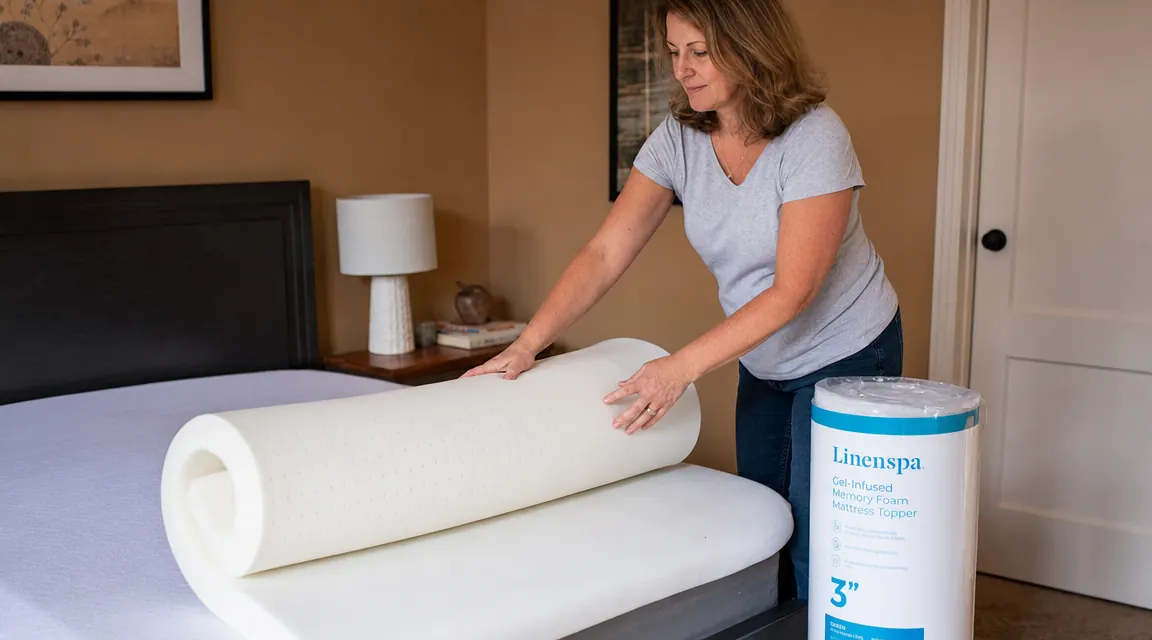
The Linenspa topper arrives compressed and vacuum-sealed in a roll. This is standard for foam products. When you cut the plastic and unroll it, the foam will begin expanding immediately. Give it a full 24 to 48 hours to fully off-gas and reach its intended thickness before you sleep on it. Sleeping on it before it expands fully can leave you with uneven firmness across the surface, and the off-gassing smell, while not harmful, is strong enough that you want the bedroom well-ventilated for that first day.
Once fully expanded, center the topper on your bare mattress. There are no ties or straps on this model, but in practice the foam grips the mattress surface well enough that it does not shift significantly during the night. If you are a particularly active sleeper, you can add a non-slip mat between the topper and mattress, but most people do not need one.
Layer in this order from bottom to top: mattress, topper, mattress protector, fitted sheet. The protector goes over the topper rather than under it, so it can guard the topper against sweat and moisture the same way it protects a mattress. This matters for longevity. Memory foam is not washable, but a waterproof protector means you can keep the topper clean for years.

Step 4: Optimize Your Bedding Stack for Cooling
The topper does the heavy lifting, but your bedding choices either support it or undermine it. A thick synthetic duvet on top of a well-designed cooling topper is like wearing a winter coat into an air-conditioned room and wondering why you are warm. The topper reduces heat buildup from below; your bedding needs to allow heat to escape from above.
For hot sleepers, the most effective combination is a cotton or bamboo-blend fitted sheet, a lightweight cotton blanket, and a low-fill-power duvet or none at all in warmer months. Natural fiber sheets have better moisture-wicking than polyester. A 300 to 400 thread count percale cotton sheet is breathable without being flimsy. If you currently use a microfiber sheet set, that is likely contributing to your overheating problem as much as the mattress is.
The topper reduces heat buildup from below. Your bedding needs to let heat escape from above. Both sides of the equation matter.
Room temperature also matters, and the sweet spot for most adults is between 65 and 68 degrees Fahrenheit. Below 65 can cause you to curl into a ball, which restricts circulation. Above 68 and most cooling surfaces lose their edge. If your bedroom runs naturally warm, a small bedside fan directed at the foot of the bed moves air across the sleep surface without blowing directly in your face. That airflow supports the convective cooling the topper is already doing.
Step 5: Give It a Real Trial Period
Your body will notice the change in surface immediately, but temperature regulation improvement takes a few nights to fully calibrate. The first night on a new topper often feels unfamiliar regardless of quality. By night three or four, most people have adapted to the new surface feel and can judge whether the thermal benefits are showing up. Give it at least two weeks before drawing conclusions.
Track a few simple data points during the trial. Do you wake up during the night, and if so, what woke you? Is it heat, noise, discomfort, or something else? This is worth knowing because the topper solves the thermal problem but cannot fix a partner who snores or street noise at 3am. If you are sleeping longer between wake-ups, that is the signal you want. For most hot sleepers, the first clear win shows up around day five or six: a full night without flipping the pillow, without pushing off the covers, without the damp-sheet moment at 2am.
What Else Helps
A gel topper is the single highest-leverage change you can make to your sleep surface, but a few supporting habits extend the effect. Shower before bed if you tend to run hot from evening activity. The warm water briefly raises your skin temperature, which then falls as you cool down after the shower, and that drop in core temperature is one of the signals your body uses to initiate sleep. It sounds counterintuitive but the warm shower accelerates cooling, not the other way around.
If you share a bed with a partner who runs cold while you run hot, consider a dual-zone approach: each person uses a separate fitted sheet and lightweight blanket rather than sharing a single duvet. The topper benefits both of you equally since it is a fixed surface, but letting each person manage their own blanket layer removes the negotiation over cover weight that wakes people up in the middle of the night.
For readers who want more detail on why these surface changes matter so much, the article on the 10 reasons a mattress topper transforms an old mattress goes deeper into the science. And if you want a full long-term account of living with the Linenspa before you buy, the Linenspa mattress topper long-term review covers a year of nightly use including where it holds up and where it does not.
Who This Works Best For
This setup is most effective for hot sleepers on foam or older hybrid mattresses who are waking up one to three times per night from heat. It is also a strong solution for anyone who finds their mattress too firm but does not want to replace it: the 3-inch gel topper addresses both firmness and temperature at the same time. If you are a side sleeper with hip or shoulder pressure points, the added cushion from the topper reduces those contact points while improving airflow.
It is a less obvious fit if your mattress is already very soft. Adding a 3-inch foam layer to an already-plush sleep surface can create too much sink, which some people find uncomfortable and which can affect spinal alignment. If your mattress is genuinely new and already rated as medium-plush or softer, a 2-inch topper or a dedicated cooling mattress pad may serve you better than the 3-inch.
Two weeks from tonight, you could be waking up once, not four times, and it would be your alarm doing it.
The Linenspa 3-inch gel memory foam mattress topper is available for queen, king, twin, and full sizes. At 4.4 stars across 133,000 reviews, it is the most-tested affordable topper available. Check current pricing and size availability on Amazon.
Amazon Check Today's Price on Amazon →